Cuba on Oct. 29 once more scored a big victory in its battle to end the U.S. economic blockade of the island. For 33 consecutive years, Cuba’s government has presented the United Nations General Assembly with a resolution calling for the blockade to be done with. Cuba is defending against all-but-open U.S. war aimed at undermining her independence and removing her government.
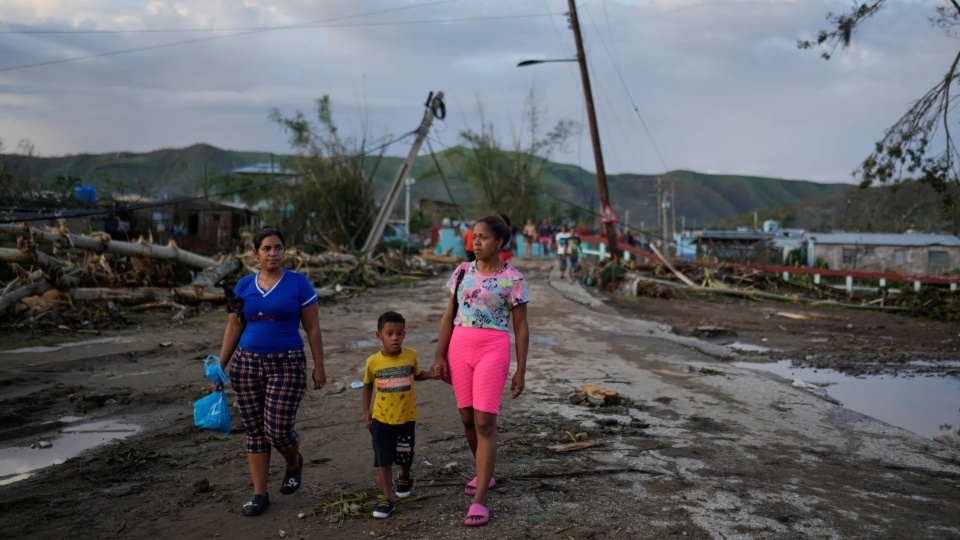
On that very day, Cuba was victorious in another war: Cuba’s government always has to be ready to also protect Cuba’s population against hurricanes sent by natural forces. Hurricane Mellissa crossed the eastern part of the island as the U.N. was voting.
Civil defense forces successfully evacuated 735,000 people to safety. Ironically, the U.S. government has a hand in this war, too. Its blockade causes all kinds of shortages that will plague Cuba’s recovery from the storm’s devastation.
The vote in the General Assembly was 165 nations in favor, seven against, and 13 abstaining. Voting against the resolution were: the United States and a group of countries ruled by right-wing autocrats: Israel, Ukraine, Hungary, Paraguay, Argentina, and Northern Macedonia.
Most of the abstaining nations were also ruled by right-wing governments or by leaders trying to gain favor with President Donald Trump: Albania, Bosnia and Herzegovina, Costa Rica, Czechia, Ecuador, Estonia, Latvia, Lithuania, Morocco, Poland, Moldova, and Romania.
As it does every year, Cuba’s foreign ministry had already created a detailed report of the blockade’s harmful effects by way of informing members of the General Assembly.
The tally this year differed from the almost unanimous support the General Assembly has given the resolution in recent years. The vote in 2024 showed 187 nations approving and only Israel and the United States in opposition, and one nation abstaining.
Even so, Cuban spokespersons extolled this year’s victory as a big win, especially in view of an unprecedented U.S. propaganda campaign prior to the vote.
The U.S. government had taken pains to influence nations taking Ukraine’s side in the ongoing Russia-Ukraine war. The hook for why they should either oppose the Cuban resolution or abstain from voting was that Cuban mercenary soldiers, along with those of other nationals, had been fighting alongside Russian forces in that war.
Writing for Mexico’s La Jornada newspaper, Rosa Miriam Elizalde, editor of Cubadebate.cu, provided one of many reports describing an unusual diplomatic offensive by the State Department. A U.S. cable leaked to the Reuters news service had portrayed Cuba as a “threat to regional peace.”
It told of thousands of Cuban mercenaries having participated in the Russia-Ukraine war over the course of two years. She indicated Cuban-American congresspersons had “sent out additional letters” aimed at “blackmailing” Assembly members into voting “no” so as to preserve good relations with the United States.
According to a statement issued by Cuba’s foreign ministry two weeks prior to the UN vote, Cuba’s government had taken steps against the recruitment of mercenaries two years earlier on discovery of what is regarded as a crime. Nine trials have taken place with a total of 40 defendants; over half of them were convicted. Cuba’s defenders say that the citizens of many other Latin American nations also engage as mercenary soldiers.
After all, the U.S. government itself easily tolerates the export of mercenary soldiers. Currently, hirelings of mercenary empresario Eric Prince are working in Haiti.
On the day prior to the vote, 28 speakers, including a few representing regional groups, addressed the General Assembly, mostly in support of Cuba. Representatives of Romania and Poland explained they would abstain from voting because of Cuba’s alleged involvement in the war. The latter delegate was speaking on behalf of four other nations.
On the day of the vote, a few other delegates spoke in favor of the resolution. Cuban Foreign Minister Bruno Rodríguez summarized Cuba’s position. He condemned the remarks of U.S. Permanent Representative Mike Waltz for their “vile, threatening, arrogant, deceitful, and cynical display of force in order to change the votes of sovereign states.” Citing the U.S. legislation that enables the blockade, he denounced Cuba’s exclusion from international financial services.
He protested against the wide range of blockade-caused shortages that affect all spheres of Cuban life. He emphasized damage done to power generation and the tourism industry, also fuel shortages and worsening statistical indicators of health. In short, he concluded, “Cuba as a country is a victim of terrorism.”
We hope you appreciated this article. At People’s World, we believe news and information should be free and accessible to all, but we need your help. Our journalism is free of corporate influence and paywalls because we are totally reader-supported. Only you, our readers and supporters, make this possible. If you enjoy reading People’s World and the stories we bring you, please support our work by donating or becoming a monthly sustainer today. Thank you!
CONTRIBUTOR