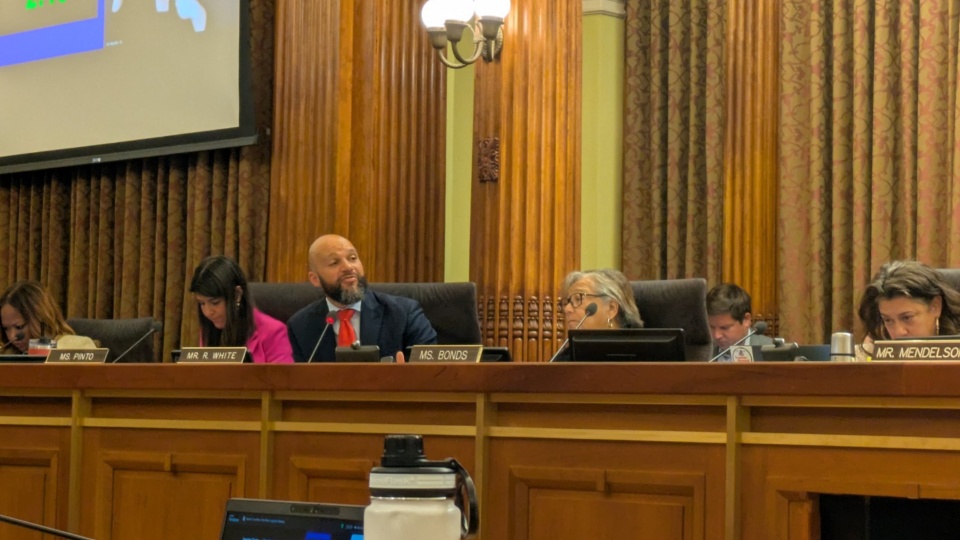
WASHINGTON—On Monday, July 14, the D.C. Council voted in favor of a revised budget after a shortened timeline under immense pressure from Mayor Muriel Bowser. The first vote, which came ahead of the second and final one a few weeks from now, took place after several extremely harmful (including non-fiscal) provisions were removed from the budget.
To list a few:
1.) Tipped worker minimum wage repeal
In Bowser’s initial “MAGA” budget, she took the side of the influential restaurant industry, represented by the Restaurant Association of Metropolitan Washington (RAMW), which has lobbied against the elimination of the tipped minimum wage, and repealed Initiative 82.
In 2022, voters went to the polls and voted overwhelmingly for the phasing out of the tip credit, which would slowly raise tipped workers’ wages to the D.C. minimum wage level. Since becoming law, RAMW and its allies have used loopholes in the rollout process to turn consumers against the policy and divide workers who made less of their earnings from tips.
Fair Price Fair Wage, a coalition that formed to ensure the law was implemented, worked in alliance with Unite Here Local 25 and the Restaurant Opportunities Center (ROC) to urge D.C. Council to remove a harmful repeal provision from the budget proposal which would lower tipped worker wages from $10 per hour to $5.95.
Council Chair Phil Mendelson and At-Large Councilmember Kenyan McDuffie both attempted to pass amendments that would have lowered the wages of tipped workers. The amendment to remove the repeal from the budget was led by Councilmember Janeese Lewis George and was passed by majority of the Council, protecting the pro-worker law for the time being.
Though it should be mentioned that just a few weeks ago, D.C. Council had voted in favor of pausing the further minimum wage increase to $12 per hour on July 1, which froze tipped worker wages at $10 for a temporary period through October. D.C. workers are demanding “No pause, no repeal!”
2.) Anti-tenant RENTAL Act removed
Also included in Bowser’s “Big Beautiful” Budget was a provision on her pro-landlord Rebalancing Expectations for Neighbors, Tenants, and Landlords (RENTAL) Act, which would streamline evictions in the District and gut the Tenant Opportunity to Purchase Act (TOPA). TOPA is a critical law that allows tenants the right to purchase the building they reside in if it goes up for sale. This has kept the cost of living down in certain neighborhoods of the city and gives longtime tenants a sense of ownership.
Legal Aid D.C., wrote about the RENTAL Act’s red flags in May of 2025, arguing it would further exacerbate the city’s affordability and housing crisis by stripping key protections for tenants. The big landlords and developers of D.C. continue to push their propaganda and lobbying through the Federal City Council and Opportunity D.C., which are the political organizations that represent big business.
At-Large Councilmember Robert White removed this harmful bill from the mayor’s budget, and has delayed the vote after much resistance from the DC community and pro-renter advocacy organizations.
3.) Sanctuary Values Act repeal
A rumor has recently surfaced in D.C. circles that Mayor Bowser has been meeting privately with Trump advisor Stephen Miller, cutting deals to undermine D.C. in order to supposedly prevent further encroachment on District’s affairs and residents.
This may have been part of the reason why she included a non-fiscal provision in her proposed budget repealing the district’s Sanctuary Values Act, which prevents city officials and metropolitan police from cooperating with federal immigration law enforcement. In an effort to appease Trump, the mayor was potentially opening up D.C. to heavy immigration raids and terror, in addition to the use of D.C. facilities as potential detention centers.
Councilmembers collectively came together and removed this harmful provision from the budget and dared Bowser to introduce it in front of the Council as a standalone bill. MAGA Republicans in Congress, however, are eyeing the same target—D..C.’s sanctuary status—and have passed a disapproving resolution to repeal the law, further undermining D.C.’s Home Rule.
4.) Ranked Choice Voting funded
In 2024, voters in D.C. overwhelmingly supported Initiative 83, which would transform local elections from a two-party, winner-take-all system to ranked choice voting (RCV). The ballot initiative also included open primaries, which would allow independents to participate in primaries of the parties on the ballot.
As seen recently in New York City with the victory of Democratic Socialist Zohran Mamdani, RCV can be an additional tool in winning elections for third parties and non-mainstream candidates. Systems such as RCV, like proportional representation, have led to Communist victories in New York, such as in the election of Ben Davis, Jr., to city council in the 1940s.
In D.C., the Democratic Party openly campaigned against Initiative 83, and Bowser did not fund it in her budget proposal. By surprise, an amendment was introduced to fund RCV but not for open primaries.
5.) RFK Stadium
In addition to the $1.1 billion cut to D.C.’s FY25 budget imposed by Congress, the RFK Stadium deal was another reason why Bowser’s proposed 2026 budget was delayed. After showing face in the White House next to Trump, NFL Commissioner Roger Goodell, and Washington Commanders Owner Josh Harris, the mayor has been pushing the stadium deal down councilmembers’ throats with her mid-July deadline.
The Council removed the RFK deal from the budget and designated it for discussion and vote as a standalone bill. Bowser continues to engage in a concerted media blitz about the stadium deal, though, claiming it will die if the Council does not act. While many Washingtonians want the football team to return to D.C., there is much concern that the deal undermines the city and will not provide the tax revenue that the city very much needs. There is also growing concern that housing costs in the area will rise, displacement will continue, and that the public has not had adequate input and time to review the deal.
There were also some other smaller wins included in the budget that survived the first round of voting. These include restored funding to the Emergency Rental Assistance Program (ERAP), Temporary Assistance for Needy Vamilies (TANF), paid family leave benefits, and more. The budget still significantly undermines D.C. healthcare programs, however, like D.C.’s Healthcare Alliance, which will result in kicking many Washingtonians off of their healthcare coverage.
Over the next few weeks, a continued clash between working-class budget advocates, big business lobbyists, and councilmembers who represent varying class interests will be taking place. A true people’s budget is needed for working-class Washingtonians who continue to suffer from the chaos in the White House and the disruption of the local economy after the mass layoffs of federal workers and the stripping of FY25 funds from our local budget.
D.C. residents deserve dignity and so much more; we deserve a fully strengthened Home Rule and Statehood.
CONTRIBUTOR