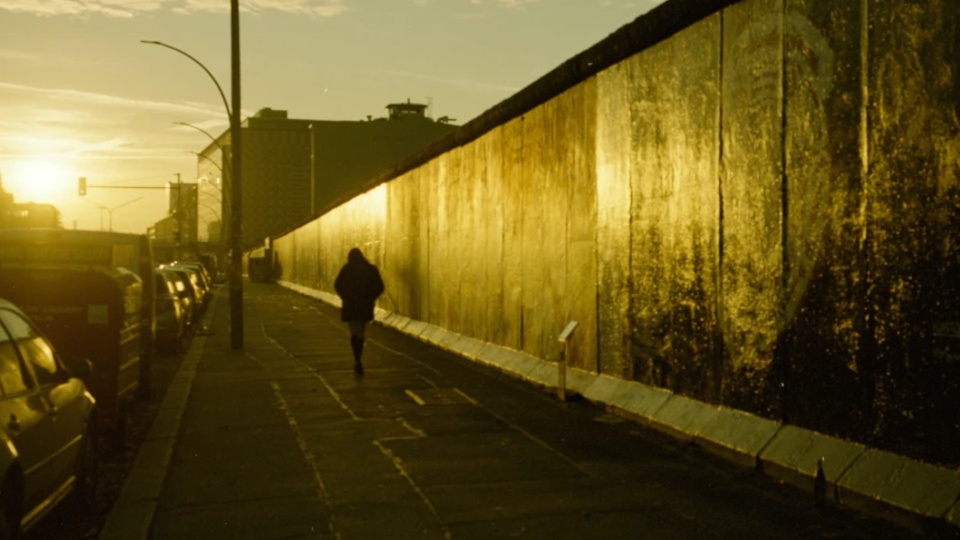
BERLIN—Thirty-five years after the fall of the Berlin Wall, East Germans still earn roughly 21% less than their western counterparts. According to figures from the German Trade Union Confederation (DGB), full-time employees in what was once the territory of the German Democratic Republic make on average €13,400 ($15,600 USD) less per year. Symbolically, that means from Oct. 16 until New Year’s Eve, they are effectively working for free by comparison.
“Closing the wage gap remains an open promise of German unity,” said Susanne Wiedemeyer, state chair of the DGB in Saxony-Anhalt. Union leaders are calling for a Federal Fair Pay Law, which would ensure that public contracts go only to companies that pay collectively bargained wages.
Today, only 42% of Eastern employees work under collective agreements—compared to 50% in the West. In Saxony-Anhalt, a collective agreement means €718 ($837 USD) more per month; in Thuringia, it means €740 ($862 USD) more. “Encouraging companies that pay fair wages is the key lever to stop wage dumping,” said Michael Rudolph, DGB regional chair for Hesse-Thuringia.
But the economic imbalance runs deeper than contracts and percentages. For many, the wage gap is only the latest expression of something more enduring: the feeling of being defined—and often dismissed—by the West.
For decades, major Western media outlets have presented East Germany largely through the lens of its perceived shortcomings, framed in Western concepts. The tone that dominates the national discourse alienates East Germans, whose stories are told in someone else’s vocabulary, from what is an overwhelmingly condescending, western-legitimizing viewpoint.
Those born in the East after reunification inherit that divide. They grew up in a society that seemed unified in structure but remained inwardly divided in experience—shaped by family histories, unemployment, by disenfranchisement, and by a subtle awareness that the norms of national culture were defined elsewhere, of their experience being utterly devalued.
The East’s sense of having been shortchanged is not just emotional; it is historical and material. The post-reunification privatization process, led by the Treuhandanstalt—the federal agency established after reunification to privatize the GDR’s state-owned industries—dismantled over 8,000 state-owned companies, leading to massive job losses and transferring vast amounts of property and influence to the West.
What was called “reconstruction” in one half of the country felt like demolition in the other. The result was not only economic loss but a profound sense of degradation.
Normality itself remains a contested idea. What counts as “normal” in Germany continues to be defined predominantly by Western standards, reflecting an enduring imbalance of power. Over 90% of senior positions in politics, business, and media are held by West Germans. National newspapers and broadcasters that claim to represent the whole country are shaped largely by Western editorial cultures, with few voices who reflect the Eastern experience from within, rather than commenting on it from without.
In this way, “the East” remains a Western construction—not merely a geographical region, but a framework through which the West defines and understands itself. Even ostensibly sympathetic portrayals risk reproducing this hierarchy, casting the West as the norm and the East as the exception that must be interpreted.
True unity, then, will not arrive through better explanation or understanding from the West, but through a more fundamental shift: the recognition that the West itself is not the universal measure of all things. And as long as the East keeps working for free, and the West keeps defining what “normal” means, the country may be united on paper—but not in experience.
We hope you appreciated this article. At People’s World, we believe news and information should be free and accessible to all, but we need your help. Our journalism is free of corporate influence and paywalls because we are totally reader-supported. Only you, our readers and supporters, make this possible. If you enjoy reading People’s World and the stories we bring you, please support our work by donating or becoming a monthly sustainer today. Thank you!
CONTRIBUTOR