

Jenny Farrell

LATEST ARTICLES BY Jenny Farrell
-
Culture
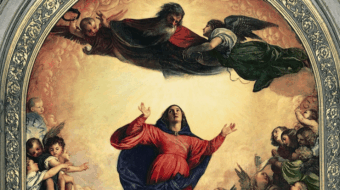
Titian and the crisis of Renaissance humanism
August 12, 2026His long career coincides with and sheds light on the early capitalist era. Titian's revolutionary technique emerged in response to the pressures of commerce, war, political reaction and plague.
Read more -
Culture
Resistance, the unverifiable, and the horse in Ali Smith’s ‘Gliff’
June 16, 2026Smith argues that defiance is a persistent, improvised salving: tending wounds, remembering the erased, and walking north toward the unverifiable.
Read more -
Culture
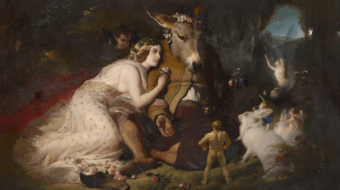
‘A Midsummer Night’s Dream’: Athenian violence and theatrical utopia
June 1, 2026Shakespeare's play is more political than you might think. The play’s enchantment and comic confusion emerge from a social order defined by violence, hierarchy, and coercion.
Read more -
Politics

Israel’s growing impunity: Naval forces seize aid flotilla with Irish president’s sister aboard
May 4, 2026On board the Israeli warship, there was massive violence: activists were bound, dragged across the floor, beaten, kicked, and shot at.
Read more -
Politics

How the EU is using sanctions to destroy journalists who defy the establishment line
April 22, 2026The sanctions represent a fundamentally authoritarian logic: that the state is entitled to define which speech is permissible, and to impose extrajudicial punishment on those who deviate.
Read more -
Culture
Revisiting ‘Waiting for Godot’ and the purpose of humanity after war
April 14, 2026This year marks the 120th anniversary of Samuel Beckett’s birth. A writer who fought against fascism and used his art to ask what, if anything, remains when everything else is gone.
Read more -
Culture
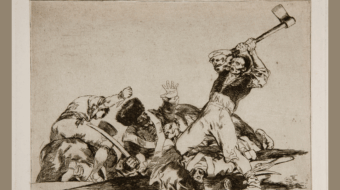
Goya’s ‘The Disasters of War’ and the aesthetics of terror
April 9, 2026March 30 marked the 280th anniversary of the birth of an artist who explored with equal intensity the horror of his era and terror as a psychological reaction and existential condition.
Read more -
Culture
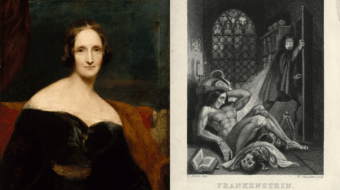
Radical legacy: Revisiting Mary Shelley’s ‘Frankenstein’ on 175th anniversary of her death
January 30, 2026The Netflix adaptation doesn’t do justice to the novel’s critique of illegitimate power and debates about tyranny, equality, and revolutionary reform.
Read more