For more than half-a-century, Israel has repeatedly bombed, invaded, and occupied Lebanon. Each new round of fighting is presented as retaliation, deterrence, or national defense. While not always directly under Israeli occupation, the people of Lebanon have endured wave after wave of Israeli military violence. From 1968 through today, Israel has attacked Lebanese civilian infrastructure whenever it suited the political aims of its government. And throughout this long history of destruction, Israeli violence has been materially supplied and diplomatically protected by the United States.
Throughout these conflicts, Israel and its backers in the White House have consistently framed Israeli aggression in Lebanon as a fight for security, democracy, peace, or other ideals. But the reality is far more concrete. Washington’s support for Israel’s wars in Lebanon is deeply rooted in economic interests. The United States uses Israel as a vehicle through which the U.S. military-industrial complex can enrich itself.
Today, that dynamic is once again visible. Israeli Finance Minister Bezalel Smotrich has openly threatened that Israel could destroy Beirut in the same way Gaza’s cities have been devastated during Israel’s ongoing genocide there. Meanwhile, Washington continues to approve billions of dollars in weapons sales to Israel. The CEOs of defense giants like Boeing, Lockheed Martin, and Raytheon continue to profit while the region descends deeper into yet another devastating war.
Understanding the history of Israel’s attacks on Lebanon therefore requires more than a military timeline. It requires examining how U.S. political and economic interests have helped sustain those wars.
More than 60 years ago, U.S. President Dwight D. Eisenhower warned Americans about the growing influence of what he famously called the “military-industrial complex.”
“In the councils of government,” Eisenhower said, “we must guard against the acquisition of unwarranted influence…by the military-industrial complex.” Eisenhower warned that the merging interests of the military establishment and private weapons manufacturers could create powerful incentives for permanent militarization.
Few regions demonstrate that dynamic more clearly than West Asia. Few conflicts illustrate it more starkly than Israel’s repeated wars against Lebanon, and the pattern began long before Hezbollah existed.
On Dec. 28, 1968, Israeli commandos launched a raid on Beirut International Airport, destroying 13 civilian aircraft belonging to Lebanese airlines. Israel claimed the attack was retaliation for a Palestinian militant operation abroad, but the raid sent a clear message that Israel was willing to strike civilian infrastructure deep inside Lebanon.
A decade later came the first major invasion. In March 1978, Israel launched “Operation Litani” sending thousands of troops into southern Lebanon and advancing as far north as the Litani River.
The invasion displaced tens of thousands of civilians and killed hundreds. Although the United Nations condemned the operation and deployed a peacekeeping force, the United States—already Israel’s primary military backer—continued supplying weapons and diplomatic support.
This set a pattern that would repeat again and again: Israeli escalation followed by American protection.
The largest Israeli assault on Lebanon to date began in June 1982, when Israel launched a full-scale invasion known as “Operation Peace for Galilee.” Israeli forces pushed all the way to Beirut, surrounding and bombarding the city for weeks. Artillery, airstrikes, and naval bombardment devastated large parts of the Lebanese capital. Thousands of Lebanese and Palestinians were killed.
One of the darkest chapters of this war was the Sabra and Shatila massacre in September 1982. Lebanese militia forces allied with Israel entered Palestinian refugee camps while Israeli troops controlled the surrounding area. Hundreds, possibly thousands, of civilians were killed.
Throughout the war, Israel relied heavily on U.S.-supplied military equipment, including: F-16 fighter jets, F-15 strike aircraft, U.S.-manufactured artillery, and American-supplied cluster munitions. (It is important to note that the use of cluster munitions is widely considered a war crime under international law, yet Israel and the U.S. have repeatedly used them in their wars across the region.)
The United States simultaneously played the role of diplomatic mediator, negotiating the evacuation of the Palestine Liberation Organization from Beirut and deploying U.S. Marines as part of a multinational force.
But while Washington presented itself as a peacemaker, it continued arming Israel and sustaining the strategic alliance that made the invasion possible.
The war ultimately resulted in Israel occupying southern Lebanon for nearly 18 years. From 1982 to 2000, Israel maintained what it called a “security zone” in southern Lebanon. Israeli forces and allied militias controlled the region while fighting a persistent guerrilla war against Lebanese resistance movements, particularly Hezbollah.
During this period, Israel repeatedly bombed Lebanese towns and villages. Two major campaigns stand out for their scale and violence.
In 1993, Israel launched Operation Accountability, a bombing campaign that displaced hundreds of thousands of civilians across southern Lebanon. Then, in 1996, Israel launched Operation Grapes of Wrath, another large-scale air and artillery assault.
One of the most infamous incidents of that campaign occurred in the village of Qana, where Israeli artillery shells struck a United Nations compound sheltering civilians, killing more than 100 people.
These operations relied heavily on American military equipment, including Apache attack helicopters, U.S.-made artillery shells, and American surveillance systems. Despite international outrage, though, U.S. support for Israel never wavered. Throughout the occupation, Israel remained one of the largest recipients of U.S. military aid in the world.
After Israel withdrew from southern Lebanon in 2000, many observers hoped the cycle of war might finally end. Instead, another devastating conflict erupted in July 2006.
Following a Hezbollah raid that captured two Israeli soldiers near the border, Israel launched a massive bombing campaign across Lebanon. Bridges, power plants, roads, airports, and residential neighborhoods were heavily targeted. Over the course of 34 days, more than 1,000 Lebanese civilians were killed, and nearly one million people were displaced.
During the war, the United States rushed shipments of precision-guided bombs and other munitions to the Israeli military. At the same time, Washington resisted international calls for an immediate ceasefire.
Then-Secretary of State Condoleezza Rice justified the war in stark terms, saying, “What we’re seeing here…is the birth pangs of a new Middle East.” (Many supporters of the U.S.-Israeli war on Iran are using similar language to the former Secretary of State today).
For many in Lebanon and across the Arab world, the statement sounded like a chilling admission that their country had become a testing ground for geopolitical engineering.
Behind the rhetoric of security and stability lies a powerful economic engine. The United States currently provides Israel about $3.8 billion annually in military aid, most of it through programs that require the funds be spent on American-manufactured weapons. This system effectively channels U.S. taxpayer money into the coffers of major defense contractors.
Among the most widely used U.S. weapons in Israeli military campaigns today are:
- F-35 and F-16 fighter jets (Lockheed Martin)
- Apache attack helicopters (Boeing)
- Hellfire missiles (Lockheed Martin)
- JDAM precision-guided bomb kits (Boeing)
- advanced missile defense systems jointly developed by U.S. and Israeli firms
These weapons have been used repeatedly in Israeli military operations across Lebanon.
In recent years, Washington has approved billions of dollars in additional arms sales to Israel, including large quantities of bombs, artillery shells, and advanced aircraft. Each new round of fighting generates new orders for the American arms industry. In Marxist terms, war becomes a mechanism of capital accumulation.
Of course, military aid alone does not sustain this never-ending cycle of death and profit. Washington has also provided Israel with diplomatic protection for decades.
At the United Nations, the United States has repeatedly used its veto power to block or weaken resolutions critical of Israeli military actions. During conflicts, American officials have often delayed ceasefire negotiations while continuing to supply weapons. This diplomatic shield allows Israeli military operations to proceed with minimal international consequences.
Even after the 2006 war, Israeli strikes in Lebanon never stopped. Over the past two decades, Israel has carried out numerous airstrikes targeting Hezbollah positions and alleged Iranian-linked infrastructure. These attacks intensified dramatically after the Gaza war that began in October 2023.
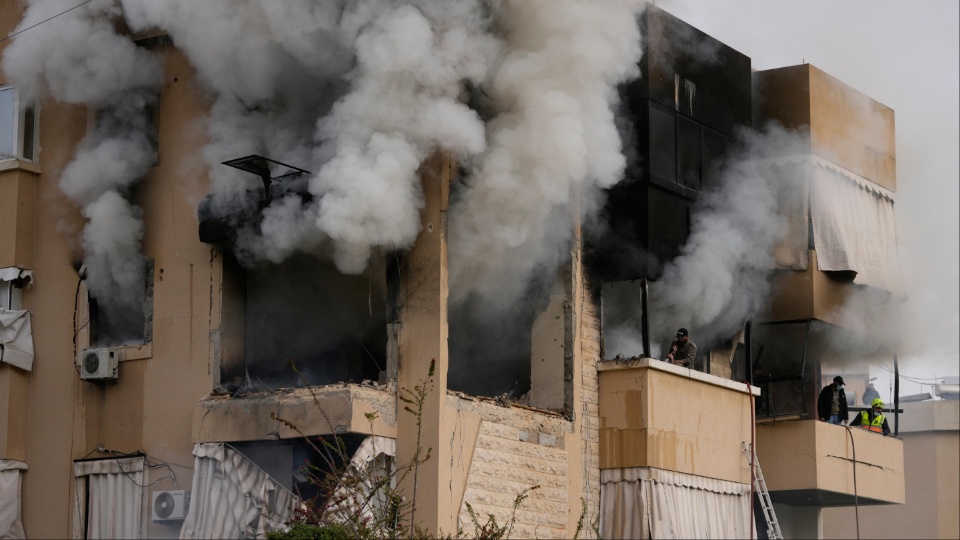
Cross-border exchanges between Israel and Hezbollah escalated into sustained fighting across southern Lebanon. Entire towns near the border were evacuated. Thousands of civilians were displaced on both sides. Meanwhile, the United States has continued approving new weapons transfers to Israel.
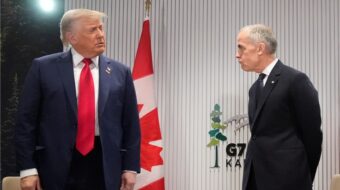
Today, as Lebanon becomes the second front in the Trump-Netanyahu war against Iran, Israel is once again wiping whole towns off the map, destroying entire neighborhoods of Beirut and threatening a full scale invasion.
The people who pay the cost of these wars are overwhelmingly working-class. Lebanese civilians lose homes, infrastructure, and livelihoods. Israeli civilians have been militarized, propagandized to, and drafted into never-ending wars. And American workers fund the system through taxes while their basic needs at home such as health care, infrastructure, and education remain underfunded.
Meanwhile, the profits flow upward. Defense contractors secure lucrative government contracts. Political elites reinforce strategic alliances. And the global arms trade expands.
Now, the Lebanese government is asking to negotiate a peace deal with Israel. The Israeli government response was to consider canceling the currently agreed-upon maritime border. In order to end the cycle of violence in Lebanon, ceasefire negotiations aren’t enough. It requires confronting the economic interests that benefit from war.
The United States has enormous leverage through its military aid and arms sales to Israel. If the U.S. government were to use its wealth to serve the American people, redirecting the money away from the defense industry CEOs and towards the working class, the Israeli war machine would have to come to a halt.
But doing so would mean challenging one of the most powerful alliances between corporate power and government policy in modern history.
Eisenhower’s warning about the military-industrial complex was issued more than six decades ago. Yet the system he described has only grown stronger.
Israel’s repeated wars in Lebanon demonstrate how geopolitics, capitalism, and militarism are tightly intertwined. With Israel again staging an all-out assault on Lebanon, the lessons of history are clear: As long as war remains profitable, the cycle of violence will continue.
And as it does, ordinary people from Lebanon to the United States will continue paying the price.
We hope you appreciated this article. At People’s World, we believe news and information should be free and accessible to all, but we need your help. Our journalism is free of corporate influence and paywalls because we are totally reader-supported. Only you, our readers and supporters, make this possible. If you enjoy reading People’s World and the stories we bring you, please support our work by donating or becoming a monthly sustainer today. Thank you!
CONTRIBUTOR