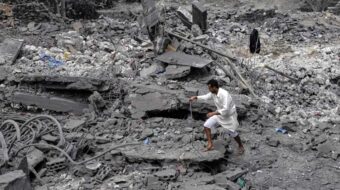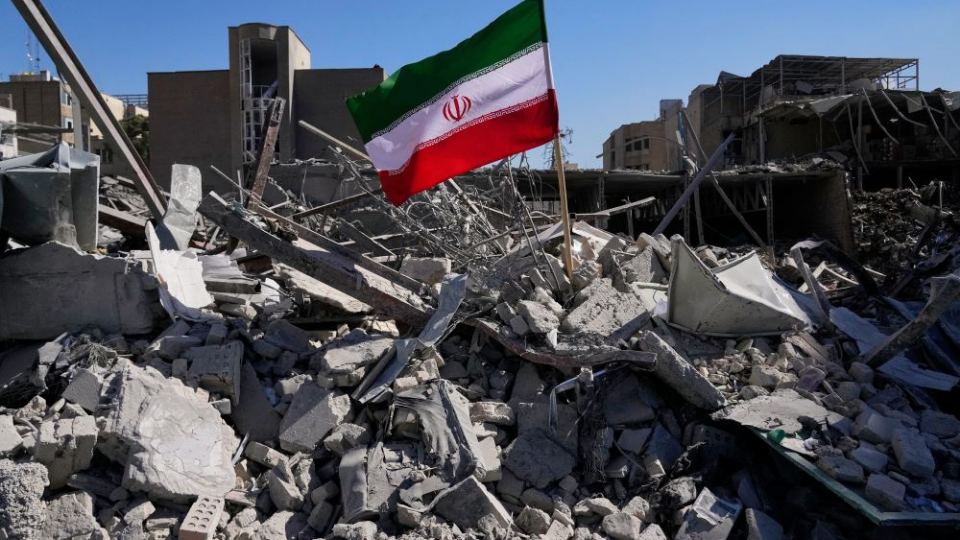
In a context of widening violations of international law, international humanitarian law, and human rights attributed to the United States and the Israeli entity, the targeting of desalination facilities in southern Iran marks a significant escalation affecting infrastructure essential to civilian survival.
Under international humanitarian law, the legal framework is clear. Article 54(2) of Additional Protocol I to the 1977 Geneva Conventions prohibits the destruction or rendering unusable of objects indispensable to civilian survival, including drinking water systems and related infrastructure.
The protection reflects a core principle of the law of armed conflict: the safeguarding of civilian life in all circumstances.
This protection is reinforced by the Madrid Rules on Water Resources in Armed Conflicts (1976), adopted by the International Law Association, which underscore the special status of water infrastructure as an element of human security rather than a conventional economic asset. Their impairment, in this reading, cannot be justified by political or military considerations without meeting strict legal thresholds.
Against this backdrop, the targeting of desalination plants in southern Iran, in the context of ongoing hostile operations, is viewed as part of a broader pattern affecting civilian infrastructure beyond recognized military objectives. Such practices place essential life-support systems within the scope of conflict, with direct consequences for civilian populations. Such attacks are further exacerbated by prolonged drought conditions in much of Iran, raising the danger level for the public.
International humanitarian law is grounded in the principles of distinction, proportionality, and precaution. Water infrastructure occupies a particularly protected position within this framework, given its direct link to the right to life and its inherently civilian function. Its disruption, therefore, carries consequences that extend beyond physical damage to immediate humanitarian harm.
Under Article 8(2)(b)(ii) of the Rome Statute of the International Criminal Court, intentionally directing attacks against civilian objects not used for military purposes constitutes a war crime. The legal assessment turns not only on scale, but on the protected nature of the object and the absence of lawful military necessity.
The broader concern is structural. The increasing exposure of essential civilian systems to military operations reflects a shift in the conduct of conflict, in which infrastructure critical to survival is incorporated into the operational environment. This raises questions regarding the prohibition of collective punishment under international humanitarian law.
Past conflicts have shown the long-term humanitarian consequences of disrupting water systems, including sustained public health crises and disproportionate impacts on civilian populations.
In this context, the question of accountability is central. Where violations of protected civilian infrastructure are established, they engage both state responsibility and potential individual criminal liability under international law.
More broadly, sustained pressure on essential civilian systems tests the resilience of the post-1945 legal order, which rests on the principle that protecting civilians in armed conflict is a binding obligation, not a discretionary choice.
We hope you appreciated this article. At People’s World, we believe news and information should be free and accessible to all, but we need your help. Our journalism is free of corporate influence and paywalls because we are totally reader-supported. Only you, our readers and supporters, make this possible. If you enjoy reading People’s World and the stories we bring you, please support our work by donating or becoming a monthly sustainer today. Thank you!
CONTRIBUTOR