WASHINGTON—Witchhunts. Innuendo. A blacklist with at least 400 names. A “graylist” with 300 more. Accusations with no proof. Mass firings. Eleven people dead. More than 25,000 lost federal jobs. Four million forced to take “patriotic” exams. Loyalty oaths. Weasels. And fear, lots of fear.
That’s the portrayal of the McCarthy era, the dread that descended on the country after World War II’s end. Egged on by corporations, isolationist Republicans, and the KKK, the media told the nation there were “Reds under the bed” in those years, especially among unions and in professions, notably the movies, which were heavily Jewish.

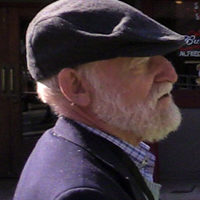
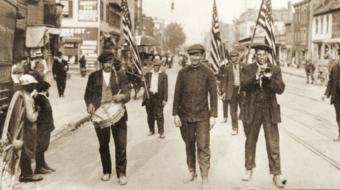
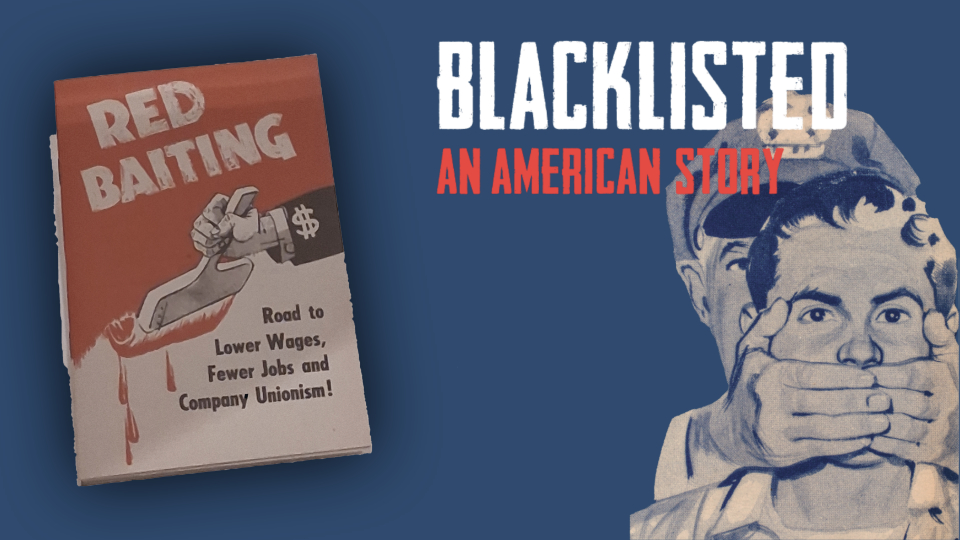
All those strands and more come together in a multimedia exhibition, complete with videos, on the third floor of the newly expanded Capital Jewish Museum in D.C., just blocks from the U.S. Capitol. Entitled Blacklisted: An American Story, it runs through Labor Day.
Leading this second Red Scare, which lasted for more than a decade, was Sen. Joseph “Tail Gunner Joe” McCarthy, R-Wis., a rabid right-winger who kept claiming the government harbored thousands of Communists and waving sheets of paper about them. As it turned out, the sheets were blank.
The main vehicle of McCarthy and his allies was the House Un-American Activities Committee or HUAC. But it had as allies a Senate committee counterpart, a silent president in Republican Dwight D. Eisenhower, pliant lower-court federal judges, and whipped-up hysteria in the press.
They were also backed by corporations spending heavily on anti-communist propaganda and by private right-wing and white supremacist witch-hunting groups. They’re all featured in the exhibition, too.
What the exhibit did not emphasize enough, however, were the actions taken against the members of the Communist Party USA itself. Editors of the Daily Worker and leaders of the party were arrested, tried, and jailed, some for long sentences, under the false charge that they were plotting the overthrow of the government of the United States.

Julius and Ethel Rosenberg were, despite pleas from the Pope, executed for allegedly turning over atomic bomb secrets to the Soviet Union. Despite these missing pieces, however, the exhibit makes it clear that the purpose of the anti-communist hysteria was to demobilize the entire labor movement, civil rights groups, and all of their allies.
McCarthy’s prime targets were often in the State Department, appealing to the isolationists who dominated the GOP and hated foreigners, Europe, Jews, Black people, FDR, the New Deal, and societal change.
Other major targets: Unions, especially the left-led unions of the Congress of Industrial Organizations (CIO), civil rights and fair housing groups, liberals, and readers of progressive publications such as The Masses, New York’s PM newspaper, and The Nation magazine—and Jews, a point particularly important for museum curators.
“Many groups were committed to issues like racial justice, workers’ rights and peace, and were Red-baited out of existence,” the exhibition comments beneath a national map. HUAC found “Reds” in D.C., and 39 of the 50 states, plus Puerto Rico. Twelve small unions folded. Some of those who were attacked fired back, but some sang like stoolpigeons.

“You are attacking the right to think!” declared screenwriter Dalton Trumbo, one of the more prominent victims of the McCarthy era—and the only one allowed to read his prepared statement when HUAC subpoenaed him. Trumbo was famous for his powerful anti-war film, Johnny Got His Gun.
Trumbo refused to name names. For that and other defiance, he spent 11 months in a federal prison in Ashland, Ky. Other victims spent up to a year, the exhibition relates.
Hundreds of careers were ruined by accusations of being “disloyal” or worse. Due process for the accused was virtually non-existent. Rumor was enough to kill a career.
For 11 people, despondent over permanent unemployment or distraught over the accusations, and in one case, being forced to identify “Communists,” it just plain killed, resulting in suicides, the exhibit points out.
McCarthy had allies in Tinseltown who helped in his campaign: Private snoops, a turncoat president of the Screen Actors Guild named Ronald Reagan, some Hollywood actors.
“We have done a pretty good job of keeping those people’s activities curtailed,” Reagan testified in a video clip about alleged “Communist” members of his own union. “We have exposed their lies,” he told lawmakers in 1947.

And the HUAC members, led by Reps. J. Parnell Thomas, R-N.J., John Rankin, D-Miss., and John Wood, D-Ga., were also accomplices. So was a two-term California Republican congressman, a noted witch-hunter who later became a senator, vice president, and president: Richard M. Nixon. As for Rankin and Wood, they were open members of the Ku Klux Klan.
The exhibition points out Hollywood moguls, many of them Jewish, caved in at a late-1959 secret meeting at New York’s Waldorf-Astoria Hotel, and signed a chilling pledge, read by Louis Mayer, the Jewish CEO of MGM. Their motive, the exhibition notes, was to protect their credibility with the public—and thus protect their profits by keeping people coming to movie theaters.
“We will not knowingly employ any Communist or anyone of any party who advocates the overthrow of the government of the United States,” Mayer read.
Some of the blacklisted screenwriters later gained work from friends in the motion picture business, but under assumed names. At least two won Oscars, and SAG finally restored their real names—years later.
The McCarthy era had other targets, too. Yielding to the pressure, President Eisenhower issued an executive order in 1953 expelling gays and lesbians from the federal government, for example, a purge that became known as the “Lavender Scare.”
But it wasn’t just Congress. Democratic President Harry Truman instituted loyalty oaths and four million people seeking federal employment had to sign them.
From 1947 to 1959, the National Labor Relations Board required union officers to sign affidavits swearing, under oath, that they were not Communists. One such affidavit is on display.

It also tells the stories of the unjustly imprisoned—people deprived of due process, cited, and jailed for contempt of Congress, or worse—for refusing to answer the infamous inquisition: “Are you now or have you ever been a member of the Communist Party?”
The initial HUAC witness list of 1947, in a museum exhibit, is resplendent with notable Hollywood names: Reagan, Trumbo, Dore Schary, playwrights Clifford Odets and Bertolt Brecht, among them.
One witness who “sang” fingered actor Howard DaSilva as “someone who speaks up too much.” DaSilva was not called. Decades later, he created the role of Benjamin Franklin in the hit musical 1776.
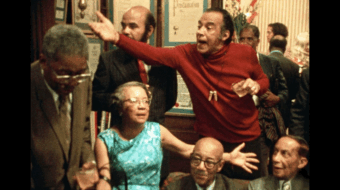
Many resisted, though, including one screenwriter, shown in a video clip of an HUAC hearing, defending the U.S. Constitution and lecturing the lawmakers about it, until the committee chairman, hearing continual shouts and jeers from the audience, dismissed the witness and adjourned the session.
Other witnesses took the Fifth Amendment. Partial transcripts of their testimony are in the exhibition. People are invited to sit in front of a silent microphone, watch video of excerpts of the HUAC hearings, and consider how they would answer the “Are you now…?” question.
Some witnesses used humor to deflect the questioners. One actress asked “You meant to say ‘prosecution’? I thought you said ‘persecution.’” And in a statement that wasn’t shown, Zero Mostel, the multilingual actor who later became the original Tevye in Fiddler on the Roof, commented, “I’m a man of 100 languages, and all of them have been blacklisted.”
Brecht employed irony and theatricality in his testimony, resulting in him being dismissed as an “unfriendly witness.” He fled the country the day after he testified, never to return.
The McCarthy era had its origins in the right-wing big business reaction to FDR’s New Deal, the massive societal changes—including workers’ rights—that it introduced, and the USSR-U.S.-U.K. alliance against the Axis powers during World War II.
Hollywood did its part in the war years, the exhibition points out, churning out patriotic propaganda films, extolling the U.S. military and the country’s Soviet allies, too, who were fighting Hitler. After the war, that second group of films became suspect in the hands of HUAC. The committee’s KKK members, Rankin and Wood, took the opportunity to equate communism with support for the civil rights movement and Jews.
“HUAC’s larger objective was preservation of the established white social order,” one of the exhibit’s historical descriptions reads. “Rankin defended the Klan, calling it ‘An American institution.’ Wood called it ‘an old American custom like whiskey and water.’”
If all this sounds familiar to today’s readers and viewers, it should. The exhibit poses the question at its very beginning about whether what visitors will see reminds them of the news headlines of today.
We hope you appreciated this article. At People’s World, we believe news and information should be free and accessible to all, but we need your help. Our journalism is free of corporate influence and paywalls because we are totally reader-supported. Only you, our readers and supporters, make this possible. If you enjoy reading People’s World and the stories we bring you, please support our work by donating or becoming a monthly sustainer today. Thank you!
CONTRIBUTOR