Four Democratic members of the U.S. House of Representatives who traveled to Cuba last week have condemned the Trump administration’s energy blockade, warning that it has turned the socialist island into what one described as a “silent Gaza.”
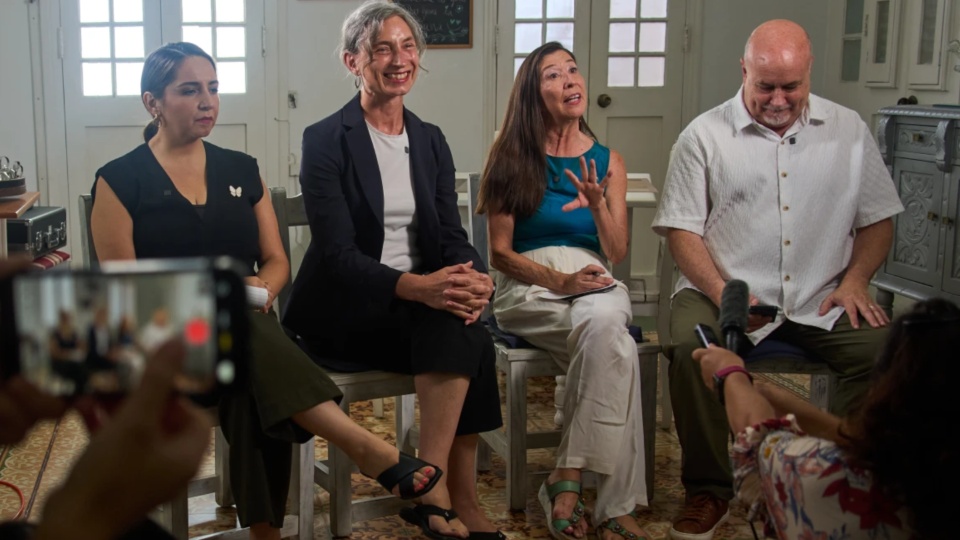
Reps. Mark Pocan, (Wis.) Teresa Leger Fernandez (N.M.), Maxine Dexter (Ore.), and Delia Ramirez (Ill.) spent five days in Havana, meeting with President Miguel Díaz-Canel, government ministers, medical professionals, business leaders, and everyday Cubans navigating the crushing effects of the blockade. Their trip, and the blunt language they used afterward, cut against the grain of Washington’s decades-long refusal to reckon with the human cost of its Cuba policy.
The Trump administration tightened the screws on Cuba’s energy supply in January, following the U.S. military’s kidnapping of Venezuelan President Nicolás Maduro, and has since threatened tariffs against any nation that dares sell fuel to Havana.
The result, according to the visiting legislators, is a humanitarian emergency: blackouts stretching more than 20 hours a day, gutted public transportation, canceled flights, a collapsed tourism sector, and workplaces unable to keep the lights on.
“There may not be bombings, but there are certainly conditions that prevent people from going about their daily lives,” Pocan said, relaying a description he’d heard from a Cuban he met during the visit.
“They can’t go to work, they can’t preserve their food, they can’t access medical supplies or live as they did before.” He added that the comparison to Gaza, made by ordinary Cubans living under the blockade, struck him as “apt.”
Pocan also took aim at Secretary of State Marco Rubio, the son of Cuban exiles who built his political career in Miami’s far-right expatriate circles. “I think Marco Rubio is making this personal and not professional,” Pocan said, pointing to the absence of any active diplomatic talks between Washington and Havana despite both governments acknowledging past contact.
Notably, Raúl Guillermo Rodríguez Castro, grandson of Raúl Castro, has reportedly stepped in as an unofficial go-between, holding a secret meeting with Rubio in February.
For their part, Dexter and Ramirez pledged to push amendments in Congress aimed at softening the blockade’s health impact and blocking any further unilateral escalation, including military action, without congressional approval.
The delegation’s visit lands as Cuba’s government continues to denounce the blockade as an act of collective punishment against its people, a characterization borne out by the daily hardships described by residents.
As solidarity movements around the world renew calls to end the U.S. blockade once and for all, the testimony of these four members of Congress adds fresh, first-hand weight to that demand.
We hope you appreciated this article. At People’s World, we believe news and information should be free and accessible to all, but we need your help. Our journalism is free of corporate influence and paywalls because we are totally reader-supported. Only you, our readers and supporters, make this possible. If you enjoy reading People’s World and the stories we bring you, please support our work by donating or becoming a monthly sustainer today. Thank you!
CONTRIBUTOR