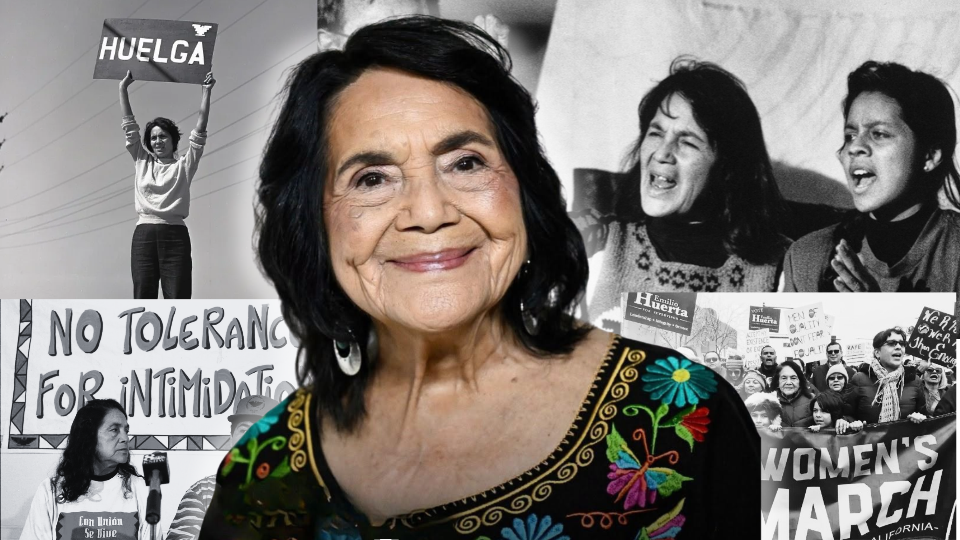
Longtime union activist and workers’ rights fighter Dolores Huerta has died at age 96. She leaves behind a decades-long legacy of resilience, historic wins, and inspiration for generations to come. The labor leader and feminist activist, who coined the slogan “Sí, se puede,” showed what was possible for workers through organizing and determination in the face of discrimination and exploitation by the bosses.
Huerta was born Dolores Clara Fernández on April 10, 1930, in Dawson, N.M. From an early age, she was connected to the workers’ struggle, as her father, Juan Fernández, was a farm worker, miner, and union activist who won a seat in the state legislature in 1938. Huerta’s parents divorced when she was five, and she and her siblings moved to Stockton, Calif., with their mother.
Huerta often credited her mother, Alicia Chávez, as one of her primary reasons for being a feminist. Huerta noted she was inspired by her mother’s independence and entrepreneurial spirit, along with her compassion for low-wage workers and involvement in their community.
Before eventually owning a restaurant and hotel, Alicia was a member of the United Cannery, Agricultural, Packing, and Allied Workers of America (UCAPAWA). As noted by the Dolores Huerta Foundation, Huerta’s mother “encouraged the cultural diversity that was a natural part of Dolores’ upbringing in Stockton. The agricultural community where they lived was made up of Mexican, Filipino, African-American, Japanese, and Chinese working families.”
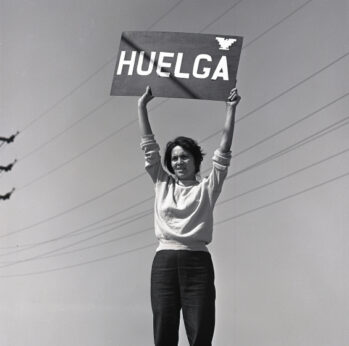
After graduating from Stockton High School, attending the University of the Pacific, and earning a teaching credential, Huerta began a teaching career. Yet, when witnessing the hardship of her students, many of whom came to school with empty stomachs and bare feet, she started on what would become a lifelong journey of fighting economic injustice.
“I couldn’t tolerate seeing kids come to class hungry and needing shoes,” she later said. “I thought I could do more by organizing farm workers than by trying to teach their hungry children.”
Her political activism began when she met community organizer Fred Ross, Sr., a founding member of the Community Service Organization (CSO). Through this work, she registered voters and helped run civic and educational programs. By the late 1950s, she was one of only a few women lobbying lawmakers in Sacramento, where, as a young Mexican American, she confronted the male-dominated political landscape.
Her legislative victories included extending Aid to Families with Dependent Children to California farmworker families, a California measure allowing driver’s license examinations in Spanish, and disability insurance protections for agricultural workers.
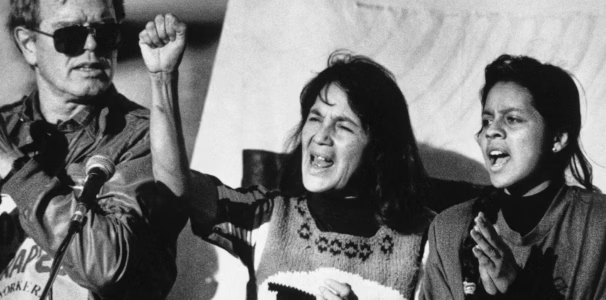
Getting involved in organized labor, Huerta helped establish the Agricultural Workers Association with Larry Itliong. In 1962, she joined Cesar Chavez in building the National Farm Workers Association, which merged in 1966 with the Filipino-led Agricultural Workers Organizing Committee to form the United Farm Workers (UFW).
Huerta was a key organizer in the historic five-year Delano grape strike. The strike, which began in 1965 and fought farm worker exploitation, ended in victory, showing the power of a grassroots-led movement that also used effective boycotts. Huerta was instrumental in enacting the Agricultural Labor Relations Act of 1975, the first law of its kind in the U.S., which gave California farm workers the right to organize collectively and bargain for better wages and working conditions.
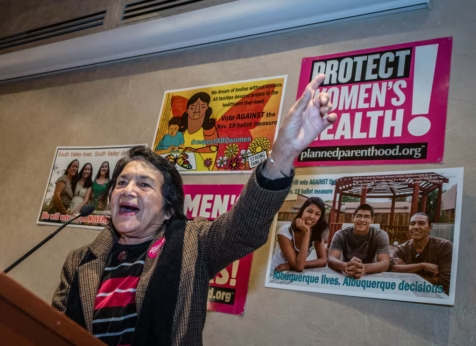
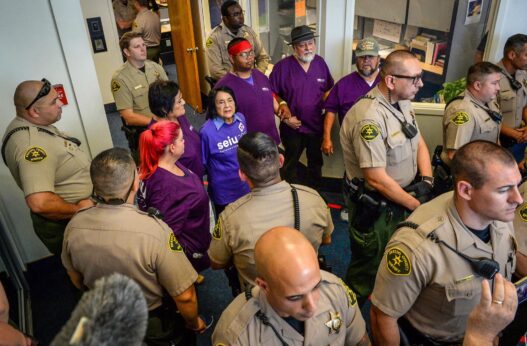
Huerta never shied away from the front lines of the struggle. In 1988, she was brutally beaten by San Francisco police during a protest, resulting in broken ribs and a shattered spleen. Although this serious injury forced Huerta to take a leave of absence from organizing, she later returned with renewed vigor. It’s estimated that Huerta was arrested more than 25 times over her lifetime while participating in civil disobedience, protests, and strikes.
Huerta’s journey exemplified growth through struggle, as her ideas about feminism also evolved. Although Huerta always considered herself a feminist, there was a time when she initially opposed contraception and abortion. Huerta credited her longtime friendship with well-known feminist and Ms. Magazine founder Gloria Steinem with helping her reassess some of her views.
Huerta understood feminism also had to include race, class, and labor. She advocated for women to hold more leadership positions in labor organizing. Huerta would later travel to Colorado in 2014 to campaign against Colorado’s Amendment 67, which would have changed state laws to define “unborn human beings” as people.
In 2012, President Barack Obama awarded her the Medal of Freedom, the nation’s highest civilian award. In her acceptance speech, Huerta said, “The great social justice changes in our country have happened when people came together, organized, and took direct action. It is this right that sustains and nurtures our democracy today. The civil rights movement, the labor movement, the women’s movement, and the equality movement for our LGBTQ brothers and sisters are all manifestations of these rights.”
Throughout her life, often as the only woman in the room, she faced the movement’s contradictions and hardships when it came to sexism. Her name and accomplishments were often only recognized when coupled with those of once-beloved labor organizer Caesar Chavez, though for decades Huerta held the secret of the abuse she suffered at his hands.
In fear of not being believed and burdened with the belief that somehow her silence concerning Chavez’s atrocities towards her and other women was necessary to protect the movement as a whole, Huerta was unable to tell her story for years.
Yet, after the New York Times published an extensive investigative article detailing Chavez’s sexual abuse, Huerta courageously let it be known that she was a survivor, too. Her statement defended the farmworkers—and the broader labor movement—while also putting in perspective the crucial work still needed to protect women and fight for their equality—not only in society generally but also in spaces often considered “progressive” and supposedly free of the ills of racism, sexism, and other forms of discrimination.
“I have never identified myself as a victim, but I now understand that I am a survivor—of violence, of sexual abuse, of domineering men who saw me, and other women, as property, or things to control,” Huerta wrote. “Cesar’s actions do not reflect the values of our community and our movement…. Cesar’s actions do not diminish the permanent improvements achieved for farmworkers with the help of thousands of people…. I have kept this secret long enough. My silence ends here.”
Outpouring of thanks
After Huerta’s death was announced, many activist, labor, and civil rights organizations paid tribute, acknowledging her significant contributions to the movements she held dear.
AFL-CIO President Liz Shuler stated, “Dolores Huerta will forever be a shining example of the best of the labor movement, embodying the fighting spirit of our unions and workers for generations” and that “her superpower was sparking workers to achieve what was thought to be unachievable.”
The labor leader called Huerta “a catalyst for one of the greatest organizing efforts over the past century, catapulting the farmworker movement and ultimately winning huge victories that improved the lives of generations of working people.”
Voting Rights advocate Stacey Abrams posted on social media: “Dolores Huerta understood tough fights, long odds, and the absolute necessity to do it anyway. From the United Farm Workers to the plight of immigrants, she organized to demand more from America, always putting working people at the center.”
The United Farm Workers released a statement mourning Huerta’s passing but also celebrating the life of their co-founder. “A tireless advocate for farm workers, women, immigrants, the LGBTQ+ community, and all marginalized people, Dolores was also a friend and mentor to generations of UFW organizers, members, volunteers and staff,” it said.
“Her life’s work was to empower her community to face and overcome injustices, and she has left farm workers and the entire Latino community stronger and more organized than she found it. Her commitment to civic engagement and bringing political power to disenfranchised people is a lesson we all should carry to the ballot box.”
Co-chair of the Communist Party USA and longtime labor activist Rossana Cambron told People’s World, “There is much to be proud of in the legacy Huerta left. As a Mexican American woman, she inspired me; she was an example of courage and dedication to the movement despite all that she had to fight through.”
T.R.A.D.E., a California nonprofit public charity created to recruit, retain, and advance women and underrepresented groups in construction, stated: “Dolores Huerta didn’t just fight for a seat at the table. She helped build a movement that made room for those who had been overlooked, underpaid, and unheard. As tradeswomen, we recognize that the opportunities we have today were made possible by women who refused to accept the way things were. Dolores was one of those women.”
United Food and Commercial Workers International Union (UFCW) President Milton Jones pointed out that “Dolores continued to lend her voice to the labor movement” this past summer, “speaking at the AFL-CIO Convention in Minneapolis, the site of ICE operations that terrified workers and left two protesters dead.
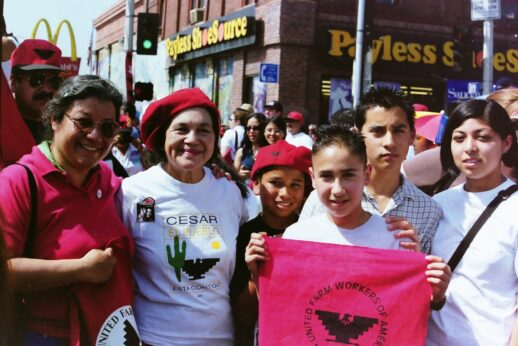
“At the end of her speech, she led us in a chant of ‘Sí se puede,’ or ‘Yes, we can,’ the rallying cry she coined. She brought an energy and hope to the crowd that was nearly impossible to recreate, even in her 90s.”
AFSCME President Patrick Moran noted that Huerta understood that “lasting change only comes with political power.” He said she “helped people with no voice overcome barriers to the ballot box. She fought for immigrants, for women, and for every worker who had been told to wait their turn.”
The Martin Luther King, Jr. Center for Nonviolent Social Change, established in 1968 by Mrs. Coretta Scott King, released a statement sharing their founder and Huerta’s allyship, noting that the two “shared an alliance rooted in the intersection of labor rights, racial equality, and women’s leadership. They organized together in Salinas, Calif., during the 1970 farmworker strikes, and stood shoulder to shoulder in Washington defending anti-poverty initiatives.”
Sal Rosselli, the National Union of Healthcare Workers President Emeritus and longtime friend of Huerta, said in a statement that “Dolores understood that a union is not just about winning contracts; it’s about bringing people together to demand dignity and respect in their workplace, and justice for everyone.
“Dolores represented the highest principles of the labor movement: worker democracy and empowerment, and she fought for them every day of her life,” Rosselli noted, telling a story of how Huerta was always up for joining organizers in their struggles:
“In 2009, when NUHW was in its infancy, Dolores, at the age of 79, joined our organizers inside the cafeteria of Kaiser’s Modesto medical center, urging workers to join us so they could once again have real power in their union. Last year, when our members at Kaiser launched a 5-day hunger strike in the midst of what became the longest strike by mental health workers in U.S. history, Dolores traveled from Bakersfield to Los Angeles to let them know she understood they were sacrificing for their patients, just like she had sacrificed for so many people. Her presence helped our members feel a renewed faith in their fight and understand that—just like her—they were on the right side of history.”
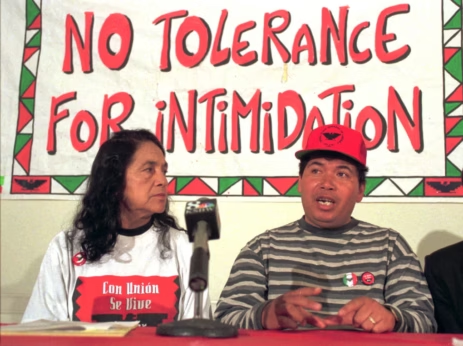
| Paul Sakuma/AP
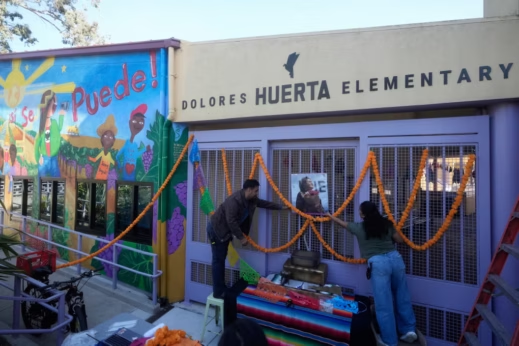
As founder and president of the Dolores Huerta Foundation, she made it part of her life’s work to continue developing leaders and advocating for working people and families everywhere. In her long life, Huerta never stopped fighting for a better tomorrow for the working people of today. Her inspirational legacy inspires others to carry on the movement she helped grow.
As the union she helped to create, UFW, asserted after Huerta’s passing, “Dolores’ work remains as important now as ever, and it continues with her example and her inspiration before us. The greatest possible tribute to her life is for her work of organizing to continue.”
Huerta once was quoted as saying, “I hope my legacy will be one of an organizer that organized to fight injustice.”
It’s clear that mission was accomplished as others around the world are inspired to continue following in her footsteps. Sí se puede.
No paywalls at People’s World
We hope you appreciated this article. At People’s World, we believe news and information should be free and accessible to all, but we need your help. Our journalism is free of corporate influence and paywalls because we are totally reader-supported. Only you, our readers and supporters, make this possible. If you enjoy reading People’s World and the stories we bring you, please support our work by donating or becoming a monthly sustainer today. Thank you!
CONTRIBUTOR