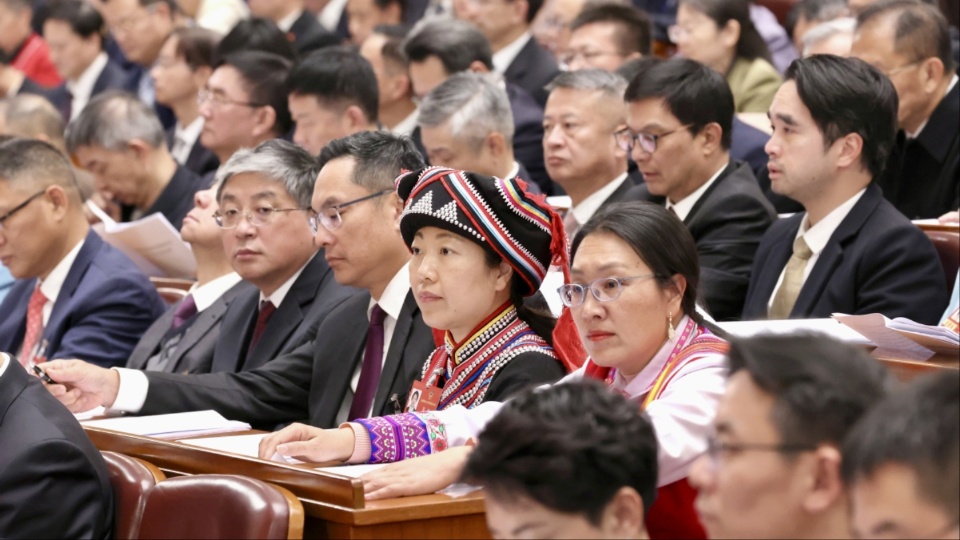
Legislators, teachers, civic leaders, workers, trade unionists, scientists, economists, and experts in many fields from across China met in Beijing in March for the “Two Sessions”—the annual meetings of the country’s two top political bodies.
The National People’s Congress (NPC) and the Chinese Peoples’ Political Consultative Conference (CPPCC) convened to review the progress made during the recently concluded 14th Five-Year Plan for the development of the economy and to set the major tasks, initiatives, and strategic goals of the 15th Five-Year Plan, which covers the years 2026 to 2030.
Premier Li Qiang opened the proceedings with a review of the work done in 2025 to accomplish all of the goals outlined in the previous Five-Year Plan. He reported on China’s response to unexpected economic challenges posed by other nations, particularly the unilateralist and protectionist tariff policies of the Trump administration in the U.S.
Li discussed how those developments negatively impacted macro-economic policy goals and placed “considerable pressure” on China’s foreign trade. He said that the government in Beijing was dedicated to navigating economic aggression with macro-economic policies that protect China’s economy.
In describing the policies and strategic goals of the next Five-Year Plan, Li highlighted how China will target the development of domestic production, consumption, and tourism to prevent further exogenous shocks of this nature and strengthen China’s ability to provide economic security for all of its people.
Li also discussed the successes of the previous five years, most notably China’s adherence to its strategy of sustainable development. One of the most significant milestones was the increase of days with good or excellent air quality in major cities rising to 89.3%. In January 2026, the government reported that China had implemented 24,000 ecological and environmental projects since 2021 and achieved a “significant reduction in major pollutants.”
Another accomplishment has been in the community-level social governance, which has focused on having conflicts among citizens resolved locally by mediation rather than through a reliance on police and the courts. Known as the “Fengqiao Model,” named for the town where it began, the process was first endorsed nationally by Mao Zedong in the 1960s.
The goal at the time was to avoid arresting people for low-level offenses and dispute and instead rely on the public to reason through issues collectively. Current Chinese President Xi Jinping has advocated a revival of that experience as a model to be implemented nationwide, with the intention that rural residents and villagers can resolve public and private issues through mediation at public security stations.
The goal is to apply local self-governance before escalating matters the courts. The legislators meeting in Beijing committed to continue applying and developing the Fengqiao Model, alongside renewed investment in public psychological counseling services, in the next Five-Year Plan.
On the topic of AI technology, the new development plan commits to funding and encouraging “central government enterprises and other SOEs (State-Owned Enterprises)” to develop and use quantum technology, embodied Artificial Intelligence (AI), brain-computer interfaces, and 6G technology.

The central government aims to take a global lead in developing and harnessing emerging technologies. China also intends to upgrade traditional industries with large-scale equipment improvements and support small and medium-sized businesses with what is called the “Cloudification, Big Data, and AI Initiative.”
This encompasses the development of AI-supported factories and digitally-integrated automated supply chains to modernize and upgrade standards, quality oversight, and overall quality of distinctive products in the Chinese small production sector.
At the conclusion of the National People’s Congress, delegates ratified the Ecological and Environmental Code that had been initially drafted in November 2023. The measure represents the first time a singular and cohesive framework for environmental and sustainable development has been integrated into China’s legal structure.
It stresses the necessity of green and low-carbon development as integral solutions to global environmental issues. Strict control will be exercised to prevent overfishing (including a 10-year ban on fishing in the Yangtze River), a strict retention rate for natural coastline will be set, and an aggressive push is planned to reduce pollutant emissions at the source to reach peak carbon emissions before 2030.
Legislators also passed the Ethnic Unity and Progress Promotion Law, which is intended to protect the study and use of ethnic minority languages and scripts and protect the cultural heritage of ethnic minority cultures in China. It encourages cultural exchanges through education, culture, sports, tourism, and the internet. Further investment is intended to support high-quality development, construction, and equal access to public services in ethnic minority areas.
The conclusion of the two sessions demonstrated, its leaders hope, China’s commitment to multilateralism, sustainable development, domestic economic growth, and the recognition and promotion of China’s many ethnic groups. The delegates gathered at the meetings projected an image of the country’s socialist system in action, continuing to develop solutions to complex global matters.
People’s World is in the midst of its annual fund drive, trying to raise $140,000 by May Day. To support working-class journalism, please consider make a donation or become a monthly sustainer. Thank you.
CONTRIBUTOR