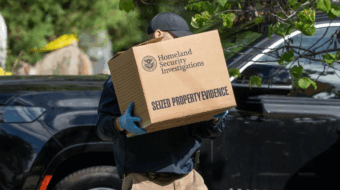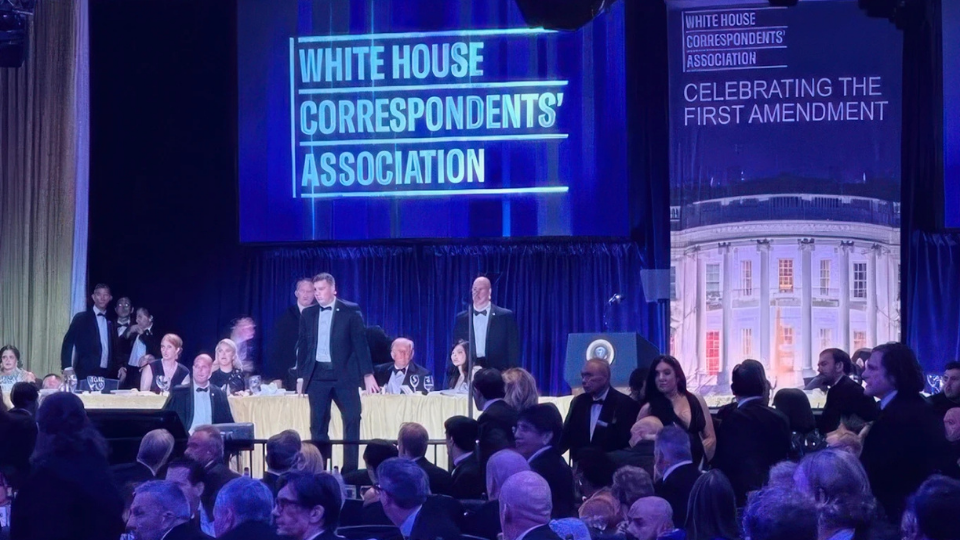
At last night’s White House Correspondents’ Dinner, journalists planned to party with White House officials who consistently berate them for doing their job. But before Trump could give what he claimed would have been the “most inappropriate speech ever made,” the event was interrupted by Cole Tomas Allen, a 31-year-old man from California who fired at Secret Service agents while attempting to storm a security check-point. Allen was taken into custody, and no officers or guests were injured.
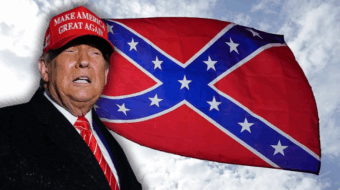
At a press conference back at the White House, Trump claimed he felt “everyone coming together” before the shots were fired and called for unity in response to the gunman’s actions. But Trump has spent a decade exploiting every possible fault line to divide Americans. He has incited violence against members of the media at rallies, and he kicked off the celebration of the United State’s 250th anniversary in Des Moines, Iowa last July 4th by declaring hatred for Democrats and others who would not support his dramatic cuts to nutrition assistance and healthcare.
We know very little about Allen or his motive for this attack, but this much seems clear: Allen believes what the President and many in our society believe—that peace will come when their enemies are obliterated, and that they must use violence to win the world they want. This idea is what Jesus called bad leaven—a spirit of division and violence that cannot easily be turned off once it has been unleashed to serve some political goal. People with power have sown to the wind, and we are all reaping a whirlwind.
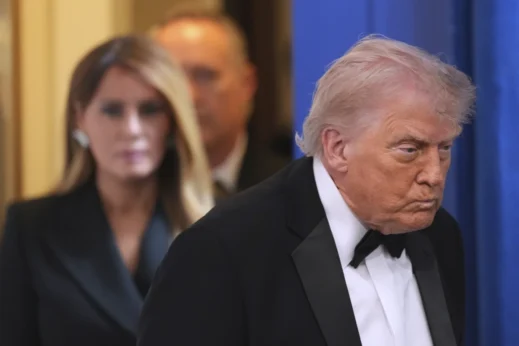
Last night’s attempt at revolutionary violence was as misguided as Trump’s war of choice in the Middle East, which continues to threaten total annihilation if Iranian negotiators do not submit to Trump’s unilateral demands. On April 7, in response to the U.S. President’s threat to destroy “an entire civilization,” Pope Leo XIV called on U.S. citizens to petition members of Congress and demand peace. Any war of choice is by definition unjust according to the just war doctrine of the Catholic Church, but the threat of total war is a direct violation of the specific teaching of the Second Vatican Council, when all of the church’s bishops gathered in Rome to consider what just war doctrine means in the modern world. In 1965 they wrote in Gaudium et Spes, “Any act of war aimed indiscriminately at the destruction of entire cities or of extensive areas along with their population is a crime against God and humanity itself.”
When Trump threatened a crime against God and humanity, the Pope said every member of the church has a moral responsibility to demand action by our Congressional representatives.
Both the U.S. House and Senate have failed to pass—on March 4, April 15 and April 17—joint resolutions to restrict Trump’s war powers in this illegal and unholy war. The slim Republican majorities in both chambers have chosen to stay in lock-step with the President through nearly two months of unholy war. By this coming Friday, May 1, the War Powers Act requires Congress to act affirmatively to continue waging war. Neither Speaker Johnson nor Senate Leader Thune have announced votes on a War Powers Resolution, and Trump has given no indication that he will comply with the law.
In the model of authoritarian “strongmen,” Trump is trying to use the U.S. military’s war powers to project strength at a moment when he is politically weak. Even last night, as he responded in real time to the events via social media, he said he wanted the show to go on, overlooking safety concerns for his own administration officials and the journalists who cover them. He wanted the show to go on for the same reason he’d planned a speech to attack the free press: he thought it would make him look strong.
But strongmen are intimidated by real strength, which is what this nation and our world desperately need right now. We need the power of love to fight people who get up every morning and ask how they can use their power to hurt people they see as their enemies. We need the authority of true moral authority to stand against the policy violence that threatens lives here at home and around the world.
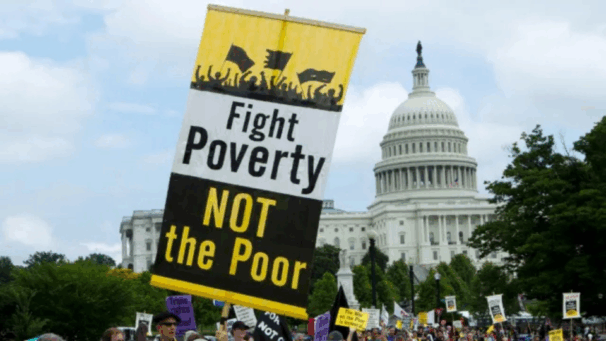
Since Monday of Holy Week, March 30, local moral leaders, veterans, and concerned citizens have gathered outside the White House in Washington, DC, and at local offices of members of Congress for Moral Mondays Against Unholy War. In the tradition of nonviolent struggle, we have aimed to clarify who has the power to stop this violence and make clear our moral demand for peace. Though he has been singled out and attacked by the President, Pope Leo was simply joining moral leaders from a range of Christian, Jewish, Muslim, Buddhist, and non-confessional traditions when he encouraged members of the Catholic Church to join this nonviolent petition. This is the shared moral demand of all of our traditions.
In the midst of his nonviolent campaigns in India, Gandhi used to say: “First they ignore you, then they laugh at you, then they attack you, then you win.” But this is only true of nonviolent campaigns that continue to grow their struggle in the power of love. We cannot be distracted by diversions, nor can we capitulate to the nihilism that accepts the chaos we are experiencing as inevitable. Without doubt, Trump and his MAGA regime will try to use the violent actions of the gunman at the White House Correspondents’ Dinner to justify more violence and suppression of civil liberties. Nevertheless, a nonviolent movement must escalate its moral demand.
266 members of Congress have voted against efforts to restrict Trump’s war powers. We need a moral witness at every one of their offices, and we need to demand meetings to discuss why we cannot continue to fund this war. Every House member who plans to return to Congress next year faces an election in November, as do a third of US Senators. We must grow our nonviolent movement for a Third Reconstruction by registering, educating, and mobilizing voters around this moral issue in the midterms.
What’s more, we need to use this opportunity to recruit a new generation of nonviolent foot soldiers. For the first time in U.S. history, the Selective Service Administration is scheduled to make registration for a U.S. military draft automatic this year. In the past, young men have been asked to register for the draft when they turn 18. After December of this year, registration will become automatic.
But enlistment in a military draft cannot be automatic in a country where the President is threatening total war. Gaudium et Spes, the same Vatican II document that condemned total war, also endorsed legal protection for those who refuse military service on the grounds of conscience. Nonviolence is not an “opting out” of the struggle against this world’s injustices; it is, instead, an “opting-in” to training and preparation for the use of a force more powerful than fists or guns, bombs or even total war. Like Dr King, who led a nonviolent struggle for justice in the United States while the Second Vatican Council met from 1963-65, the bishops of the Catholic church recognized that the prospect of total war in a nuclear era meant that we as a society have to choose between “nonviolence and nonexistence.”
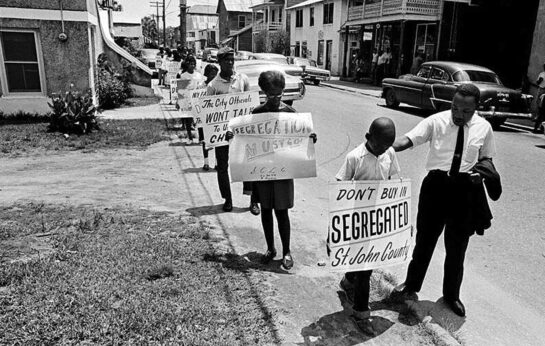
Our moral movement against unholy war must confess that we have not sufficiently invested in recruiting and training young people for nonviolence. The U.S. military spends billions of dollars recruiting poor and marginalized youth for the military, sponsoring video games and sporting events that promote violence as the answer to society’s problems. As we commit to escalating our moral witness at the local offices of members of Congress, we also pledge to be a space where young people can gather with elders who know the power of nonviolence and make a public profession of their status as conscientious objectors.
Toward that end, we want to share this vow of nonviolence that individuals can make in community together at Moral Mondays Against Unholy War. If you know a young person who you do not want to see devoured by a war machine that is serving the selfish interests of billionaires, encourage them to join a Moral Monday in your community and commit to nonviolent struggle for a better world.
Vow of Nonviolence
I pledge allegiance to the power of love.
I reject every myth that claims a world or a nation can be built by destroying my enemies, and I affirm the wisdom of every tradition that teaches life is a gift.
In gratitude for the gift of my life, and in recognition that service is the rent we pay for our space here on earth, I commit to nonviolent struggle against every form of violence.
I refuse to accept the violence that starves a child, the violence that denies someone healthcare, the violence that keeps people in poverty, the violence that denies people a place to belong, the violence that says some types of people do not deserve the same respect that the inherent dignity of every person demands of each of us.
Because I understand the power of love in action, my resistance to violence is not passive. I commit to using every nonviolent tool available to resist evil and build beloved community.
I will make every effort to pursue the truth by speaking directly with people whose actions I oppose.
I will petition my representatives and engage in mass education through nonviolent protest, vigils, marches, and mass assemblies.
I will exercise the nonviolent tool of voting, and I will work to educate, register, and mobilize voters who have been alienated from the democratic process.
I will aim to keep my own intentions pure through fasting, prayer, meditation, and self-reflection as means of fighting the violence that is within me.
I will refuse to cooperate with evil, joining others in boycotts, strikes, sit-ins, and shut-downs.
I commit that I am willing to lay down my own life to resist evil, but I will not take another person’s life.
I make this pledge in the company of a beloved community, and I trust that the power of love, working through us and others like us, can transform the world that is into the world that ought to be.
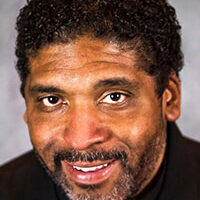
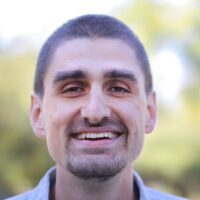
Our Moral Moment w/ Bishop William Barber & Jonathan Wilson-Hartgrove
As with all op-eds and news analytical articles published by People’s World, the views expressed here are those of the author.
We hope you appreciated this article. At People’s World, we believe news and information should be free and accessible to all, but we need your help. Our journalism is free of corporate influence and paywalls because we are totally reader-supported. Only you, our readers and supporters, make this possible. If you enjoy reading People’s World and the stories we bring you, please support our work by donating or becoming a monthly sustainer today. Thank you!
CONTRIBUTOR