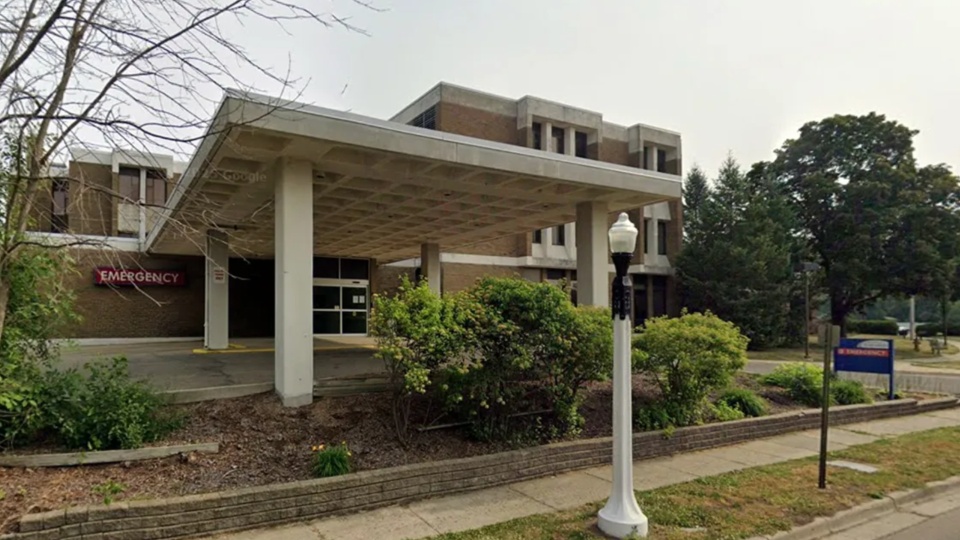
STURGIS, Mich.—For 101 years, Sturgis Hospital stood as a cornerstone of healthcare in southwest Michigan. But on June 19, the doors closed for good. It is but the latest casualty in a decades-long assault on public health infrastructure and an economic system that prioritizes profits over people.
The closure came with staff being given a mere 72 hours’ notice before entirely ceasing operations. That left the registered nurses, represented by the Michigan Nurses Association (MNA), and hundreds of other healthcare workers scrambling to figure out what to do.
In response to the flagrant disregard for working families and patients, the MNA filed a lawsuit against Sturgis Hospital alleging violations of the Worker Adjustment and Retraining Notification (WARN) Act. This federal law requires employers with 100 or more employees to provide 60 days’ written notice before a mass layoff or plant closing.
“Sturgis Hospital, which was known to struggle financially for years, should have followed federal law, which we believe required it to give employees 60 days’ notice of closure; instead, it gave employees—including nurses who worked there for decades—just 72 hours, causing significant hardship for them,” said Associate Executive Director Janella James in a statement.
James noted that the hospital is circumventing basic workers’ rights, stating, “Some nurses still have not been paid their final paycheck, and all were cut off their health insurance by the end of June without even rights to continue their insurance through COBRA.”
In the complaint filed by MNA attorney Andrew J. Smith, the union is seeking back pay and benefits for the 60-day period required by law, along with attorney fees and court costs. While management can sometimes claim exceptions to the WARN Act due to “unforeseeable business circumstances,” the MNA argued that Sturgis Hospital does not qualify.
As the union noted, “Longstanding financial problems do not automatically establish or defeat an exception.” In fact, they said, the hospital had previously issued a 60-day notice in 2022 when it first feared closure, proving that the crisis was hardly a sudden surprise.
For the residents of Sturgis and the surrounding communities, the loss of the emergency department is a matter of life and death. Patients in crisis are now being redirected to facilities miles away, including Parkview LaGrange Hospital in Indiana (11 miles away), Beacon Three Rivers Hospital (22 miles away), and Insight Hospital Coldwater (25 miles away). For a rural population where ambulance response times are already stretched thin, these extra miles can mean the difference of receiving life-saving care or not.
Ultimately, the tragedy of Sturgis, for patients and staff alike, is a symptom of a healthcare system that simply treats rural communities as expendable. Since 2010, over 100 rural hospitals have closed across the U.S., with hundreds more on the brink.
But why do rural hospitals like Sturgis keep bleeding out? It comes down to two core reasons.
First, rural communities have higher rates of uninsured and underinsured patients. When they can’t pay their already obscenely expensive medical bills—due to a number of factors including soaring affordability costs, the price-gouging of Big Pharma, and lack of good job opportunities—hospitals are forced to eat the cost of their care.
Second, rural hospitals are ill-equipped for a system in which dozens of different private insurance companies, each with their own rules and denial tactics, force them to try collecting payments via their inefficient, fragmented profit-driven processes—all while the unpaid medical bills from patients pile up.
That’s why the nurses of Sturgis and their union, which is part of National Nurses United (NNU), recently released an open letter stating that only structural policy change, such as Medicare for All, would be able to meet the scale of the nationwide health care crisis.
If implemented by Congress, Medicare for All would cover every single patient and completely eliminate uncompensated care for hospitals. They would get paid for every patient, every time. It would also replace the chaotic web of private insurers with one single streamlined billing system that would dramatically cut the administrative overhead that suffocates small facilities.
And by establishing stable, fair reimbursement rates, it would help keep rural emergency rooms open by eliminating the profit motive which encourages hospital conglomerates to close “money-losing” rural branches in favor of more lucrative urban mega-centers.
“As patient advocates, it is our duty to fight for a system that prioritizes people over profits. So even on our hardest days, we won’t stop fighting for Medicare for All,” said Bonnie Castillo, RN and executive director of NNU.
Cameron Harrison contributed material for this story.
We hope you appreciated this article. At People’s World, we believe news and information should be free and accessible to all, but we need your help. Our journalism is free of corporate influence and paywalls because we are totally reader-supported. Only you, our readers and supporters, make this possible. If you enjoy reading People’s World and the stories we bring you, please support our work by donating or becoming a monthly sustainer today. Thank you!
CONTRIBUTOR