

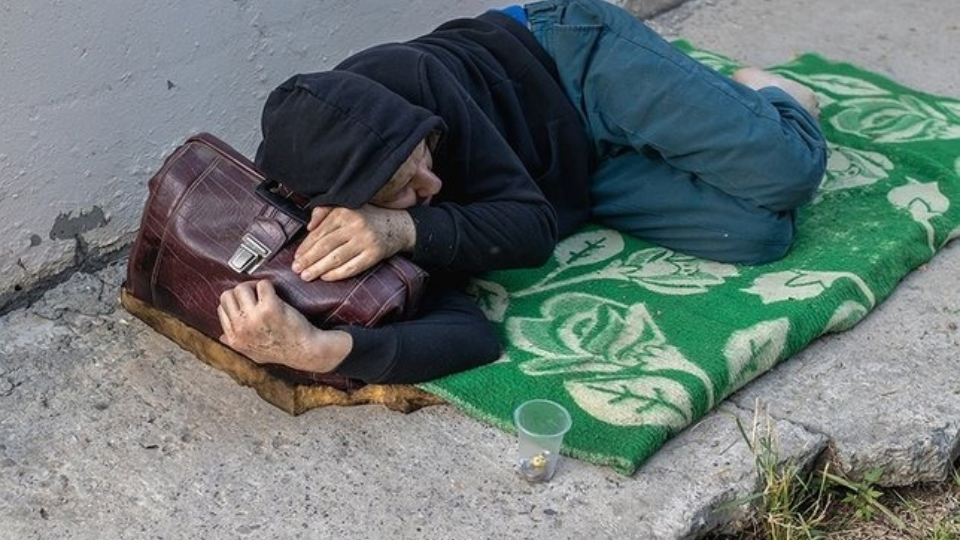
New York State’s housing crisis is not confined to the five boroughs of New York City. Deplorable housing conditions exist throughout Nassau and Suffolk counties on Long Island as well. Why are so many people unhoused or on the edge of homelessness? The root of the problem is capitalism.
The United Way’s annual ALICE report—short for “Asset Limited, Income Constrained, Employed”—documents the financial hardship facing hard-working Long Islanders, tracking how much households must spend on basic needs, including rent. According to the most recent report, 36% of households in Nassau County and 40% in Suffolk County either live below the federal poverty level or earn too little to cover the basic cost of living
Exorbitant rents, rising utility bills, and childcare costs are squeezing working-class Long Islanders, and for years wages have failed to keep pace with the cost of basic needs.
If the midterm elections showed anything, it is that affordability is the number one issue for Americans. Gov. Kathy Hochul’s answer to the housing crisis is more and more construction—but she continues to rely on private developers to do the building.
That is hardly surprising, given the large contributions she receives from real estate developers, commercial landlords, and major corporate interests. Donors to her reelection campaign from the for-profit housing industry include:
- Jed Walentas of Two Trees Management, chair of the Real Estate Board of New York (REBNY), who gave $8,000 to her campaign and $129,600 to the New York State Democratic Committee;
- Douglas Durst, who gave $7,500 to the campaign and another $25,000 to the state committee;
- The LeFrak Organization, which donated $18,000;
- The Elghanayan family (Rockrose Development and TF Cornerstone), which gave $43,000; and
- Other REBNY members, with additional reported donations of $100,000 or more.
On Long Island, eight industrial development agencies (IDAs) get hand out PILOTs (payments in lieu of taxes) and other tax abatements that do little to address the housing crisis. These handouts let developers avoid paying regular property taxes, often for as long as 30 years.
Peter Florey of D&F Development Group, for example, has collected PILOTs for years on so-called affordable housing without building the kind of housing that households on the brink of homelessness actually need or can afford.
Nationally, the Housing for All Act (H.R. 2945), introduced by Rep. Ted Lieu in the 2025–2026 session of Congress, has not passed. In New York, there has not been a single omnibus housing bill. Gov. Hochul’s proposals—voucher expansion, eviction prevention, supportive housing, and increased affordable supply—are not real answers, because they depend on for-profit development.
There are solutions to the affordable housing problem that leave for-profit developers out entirely:
- Community land trusts (CLTs). These nonprofit, community-governed organizations acquire land and hold it permanently in trust, while selling or leasing the buildings on it to low- and moderate-income residents. The CLT keeps ownership of the land and gives the homeowner a long-term ground lease, typically for 99 years. Resale formulas cap how much a home can appreciate, keeping it affordable for future owners. On Long Island, the Long Island Housing Partnership operates a CLT.
- Nonprofit developers and supportive housing. Mission-driven nonprofits secure grants, tax-exempt bonds, and low-interest financing to build multifamily rentals and supportive housing without a profit motive. Examples include Concern Housing and Community Innovations. Concern Housing has partnered with the Sisters of St. Joseph of Brentwood to convert the former Academy of St. Joseph into 176 affordable and supportive apartments.
- Municipal land banks. These public and nonprofit entities acquire vacant, abandoned, and tax-foreclosed properties, clear up their title problems, and transfer them to mission-driven stewards—nonprofits, CLTs, or local housing authorities—for affordable redevelopment. The Nassau County Land Bank is one Long Island example.
- Limited-equity housing cooperatives. Residents collectively own a multifamily building or complex through a nonprofit corporation rather than owning individual units. The model is similar to New York’s Mitchell-Lama program.
- Public and social housing authorities. These include mixed-income, publicly owned developments in which moderate-income tenants help subsidize the affordable units and fund their maintenance, without relying on private equity.
- Homeowner-led accessory dwelling units. Existing homeowners would act as micro-developers, adding units that generate income to offset their property taxes and mortgages. In many Long Island communities, this would require rezoning. The Community Development Corporation of Long Island (CDCLI) and the Long Island Housing Partnership could help income-eligible homeowners finance construction. With state funding in place, commercial developers would be cut out entirely.
Together, these models would take the profit out of housing development and eliminate the need for shelters on Long Island.
Other demands that Communists and housing advocates can rally behind include:
- Ending evictions and foreclosures.
- Strict rent control.
- Repealing the federal Faircloth Amendment, which caps the construction of new public housing. Repeal would open the door to large-scale public housing development, paid for by taxing the rich, ending the PILOTs and tax abatements handed to for-profit slumlords, and, of course, cutting military spending on all wars.
- Organizing tenant unions and associations.
- Using eminent domain against slumlords—a step that matters throughout New York, and on Long Island in particular—or, at the very least, revoking PILOTs from builders who have let their buildings fall into deplorable condition.
As with all op-eds and news-analysis articles published by People’s World, the views expressed here are those of the author.
No paywalls at People’s World
At People’s World, we believe news and information should be free and accessible to all, but we need your help. Our journalism is free of corporate influence and paywalls because we are totally reader-supported. Only you, our readers and supporters, make this possible. If you enjoy reading People’s World and the stories we bring you, please support our work by donating or becoming a monthly sustainer today. Thank you!
CONTRIBUTOR