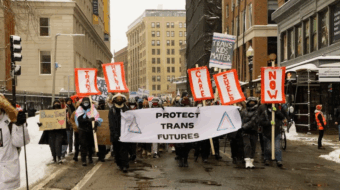
They want us afraid, silent, or even gone. That’s the only honest way to read what the far right has been doing to LGBTQ people in America over the past year and a half.
Since Donald Trump returned to the White House, the federal government has been turned into a weapon aimed squarely at queer and trans communities, and the attacks have come so fast and from so many directions that it’s hard to keep up.
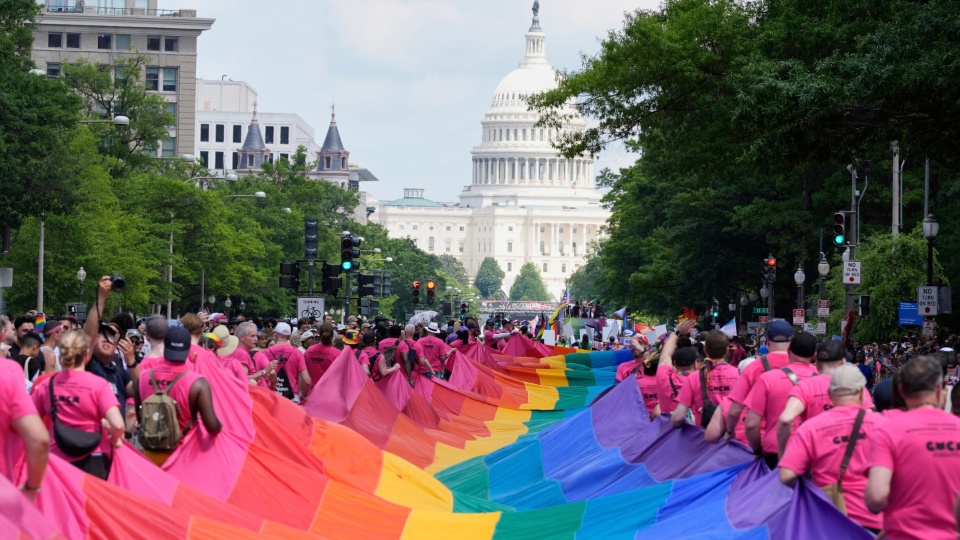
But Pride has always been about finding each other and fighting back, and this Pride season, that’s what millions are gearing up to do.
The scale of the assault
State legislatures have introduced hundreds of anti-LGBTQ bills in 2026 alone—nearly 400 tracked by the ACLU, with the Trans Legislation Tracker counting over 645 specifically targeting trans people. The bills span everything from healthcare bans and school censorship to identity document restrictions and employment discrimination.
In Kansas, lawmakers stripped trans people of the right to accurate ID documents, giving some residents less than 24 hours’ notice—meaning a person could be fined $1,000 and jailed simply for driving to the DMV to comply. Other states, including Arkansas, Florida, and Indiana, have taken similar steps.

At the federal level, things have been even worse. Attorney General Pam Bondi—before she was canned by Trump—directed the FBI to offer cash bounties for information on trans activists, labeling them “domestic terrorist groups.” The White House counterterrorism strategy document names “radically pro-transgender” people alongside drug cartels and Islamist militants as threats.
Medicare and Medicaid funding has been stripped from hospitals providing gender-affirming care to minors—care that every major medical association endorses. And transgender service members, some of whom have deployed multiple times, face mass discharge under a military ban that a federal court found was “soaked with animus and dripping with pretext.”
These attacks go beyond what the media constantly calls a “culture war;” they constitute a state-sponsored campaign of persecution.
One struggle, many targets
What the whole working-class movement needs to understand about all this is that the same political apparatus leading this campaign against queer and trans people is running the same playbook everywhere else.
The voter ID laws being used to suppress Black voters in Louisiana, Tennessee, and elsewhere are cut from the same cloth as the ID bans stripping trans people of their documents. The ICE raids terrorizing immigrant families—separating workers from their children, dragging people away to detention camps—are enforced by the same administration labeling trans activists terrorists.

The gutting of reproductive rights, which has forced women to flee states for abortion access, shares its legal architecture with the laws banning gender-affirming healthcare. The defunding of DEI programs in universities and federal agencies targets Black faculty, queer students, women, and immigrants simultaneously.
These are not parallel struggles happening in separate lanes. They are a single, coordinated ruling-class offensive against the multiracial, multi-gendered working class. The same billionaires funding anti-trans legislation are also putting cash toward union-busting. The same think tanks writing model bathroom bills are drafting right-to-work laws and voter suppression legislation.
Queer workers are workers. Trans immigrants are immigrants. Black queer women face the intersection of every one of these attacks at once. The movement that wins will be the one that refuses to be divided.
Fighting back—and winning
Often lost in the avalanche of bad news, though, is the fact that people are fighting, and sometimes they’re winning.
Down south, Equality Florida mobilized grassroots advocates to show up to committee hearings every single day of the 60-day legislative session. They sent over 6,000 emails, packed committee rooms, and made hundreds of calls.
The result? Four out of five anti-LGBTQ bills were stopped or neutralized—including legislation that would have let the state attorney general sue teachers and doctors for supporting trans youth, and a “Don’t Say Gay or Trans” bill that would have spread the censorship from schools into workplaces. The grassroots beat the statehouse.
In Congress, Sen. Ed Markey and Rep. Pramila Jayapal reintroduced the Transgender Bill of Rights—a comprehensive resolution that would codify trans people’s right to healthcare, shelter, safety, and economic security. It won endorsements from the AFL-CIO’s Pride At Work, the ACLU, the National Women’s Law Center, the Immigration Equality Action Fund, and dozens of other organizations—a coalition that looks exactly like what a united working-class movement should look like.
In the courts, trans service members and civil rights attorneys continue challenging the military ban, the prison policies, and the executive orders. Seventeen states, led by Minnesota, are fighting back against federal threats to cut school funding. The legal resistance is holding ground.
Eyes on November
The movement is under no illusions that courts and legislatures alone will save the day. The Human Rights Campaign has launched a $15 million electoral program—its “Let’s Get Free – Vote Equality ’26” initiative—targeting eight competitive House seats and Senate races in Georgia, Michigan, Minnesota, New Hampshire, and Ohio. The goal is a pro-equality majority in the next Congress and the capacity to halt the weaponization of federal power against LGBTQ people.
 The numbers suggest this is not wishful thinking. LGBTQ voters are poised to make up close to 10% of the midterm electorate, and a full 92% say they will definitely vote (compared to 68% of non-LGBTQ voters). The National LGBTQ Task Force’s “Queer the Vote” program is phonebanking key districts from Florida to Texas, linking LGBTQ turnout explicitly to the broader fight against anti-Black and anti-immigrant political forces.
The LGBTQ Victory Fund is pushing for strategic, winnable races at the state level, recognizing that attorneys general and secretaries of state are the frontline defenders of both voting rights and civil liberties.
HRC President Kelley Robinson put it plainly: “I think that this is the election that’s going to be the sea change, not only for getting to a pro-equality majority but for changing the momentum on this fight for equality.”
That sea change won’t come from any single organization or any single community. It will come when queer workers and union members, Black voters facing suppression, undocumented immigrants living in fear, women fighting for their reproductive lives, and everyone else on the receiving end of this administration’s cruelty recognize that they are, in fact, on the same side.
Happy Pride. Now let’s get to work.
We hope you appreciated this article. At People’s World, we believe news and information should be free and accessible to all, but we need your help. Our journalism is free of corporate influence and paywalls because we are totally reader-supported. Only you, our readers and supporters, make this possible. If you enjoy reading People’s World and the stories we bring you, please support our work by donating or becoming a monthly sustainer today. Thank you!
CONTRIBUTOR